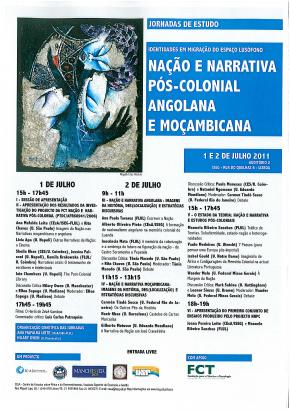
 Estas jornadas integram-se numa reflexão mais ampla relativa às “Identidades em Migração no Espaço Lusófono”. As sessões terão lugar no Auditório 2 do ISEG, Rua do Quelhas nº 6, Lisboa, de 30 de Junho a 2 de Julho de 2011.
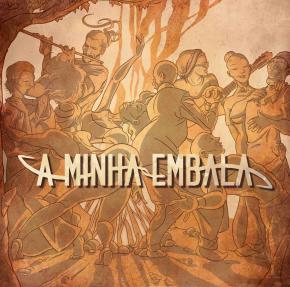 A minha embala é um projecto de Aline Frazão (voz, guitarra) e César Herranz (flauta transversal, percursão), ao encontro das expressões musicais dos diferentes países de língua portuguesa.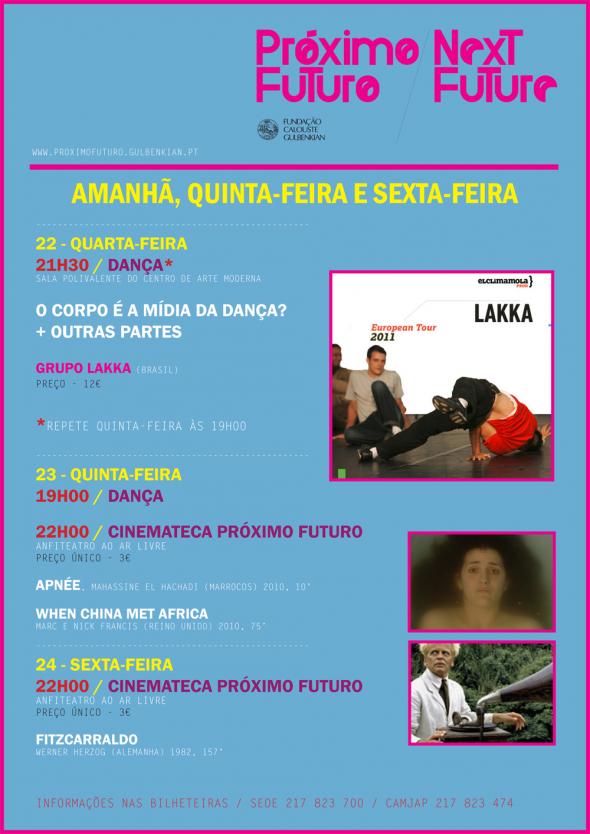
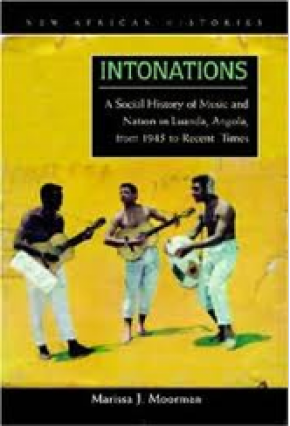 Dr. Moorman is a historian of southern Africa whose research focuses on the intersection between politics and culture in colonial and independent Angola. Her book Intonations explores how music was a practice in and through which Angolans living under extreme political repression imagined the nation and how the particularities of music and historical moment cast this process of imagining in gendered terms. Drawing on interviews with musicians and consumers of music, prof. Moorman explores how memory, experience and pleasure shape politics and history. She also demonstrates how cultural practice is productive of politics and not just derivative of it. Today’s talk is about her new research into the relationship between the technology of radio and the shifting politics of southern Africa as anti-colonial movements established independent states in the context of a region newly charged by Cold War politics.
 abre sus puertas en julio [2011]


Dá fala
Diffusion culturelle, réflexions, images, notes de voyage
Archives
Auteur
- administrador
- adrianabarbosa
- Alícia Gaspar
- arimildesoares
- camillediard
- candela
- catarinasanto
- claudiar
- cristinasalvador
- franciscabagulho
- guilhermecartaxo
- herminiobovino
- joanapereira
- joanapires
- keitamayanda
- luisestevao
- mariadias
- marialuz
- mariana
- marianapinho
- mariapicarra
- mariaprata
- martacacador
- martalanca
- martamestre
- nadinesiegert
- Nélida Brito
- NilzangelaSouza
- otavioraposo
- raul f. curvelo
- ritadamasio
- samirapereira
- Victor Hugo Lopes
Data
- septembre 2026
- août 2026
- juillet 2026
- juin 2026
- mai 2026
- avril 2026
- mars 2026
- février 2026
- janvier 2026
- décembre 2025
- novembre 2025
- octobre 2025
Étiquettes
Les plus lus
- FilmLab Moçambique
- FIC Luanda 2026 apresenta primeiros filmes da Competição Internacional e reforça ambição de Angola no circuito africano de cinema
- Novela gráfica «Caderno de Memórias Coloniais»
- Mário Lúcio de Sousa à conversa
- ROOFTALK Conversa, Música e Artes
- Intimate Distance, Uncaptured City, Edson Chagas
- ILUMINAÇÕES DA ALA OCIDENTAL DA RELAÇÃO DE LISBOA, de Sancho Silva
- O Cinema por Dentro, em Monsanto
- MEU SEMBA, de Hugo Salvaterra. hoje no Cinema Ideal
- Não Resta Nada, de André Godinho