 If images are powerful for identifying and revolutionising through the multiple interpretations they introduce into human feelings, then words identify through questioning, as they are connected to an idea of language as domination and authority – in other words, only those with social and political legitimacy write and speak.
15.11.2020 | by Marta Lança and Welket Bungué
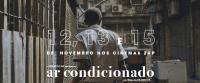 To celebrate the 45th anniversary of Angola's Independence, the ATD and GERAÇÃO 80 in collaboration with TPA, Mostra de Cinemas Africanos and PlatinaLine will be shown documentaries of the project "Angola - Nos Trilhos da Independência”, “Independence”, “Women of Arms”, “São Nicolau - They Haven't Forgotten” and “The Persistent Fragility of Memory”.
11.11.2020 | by Geração 80
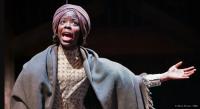 For Romero, this is one of the points of art: to help us face up to our own part in slavery and its legacy, and a powerful way to reveal, and explore, our past. “With this story, we wanted to tell the British angle – this is British history,” says Romero of The Whip. “We’re in constant dialogue with our past: we have to be.”
22.10.2020 | by Holly Williams
 “If it hadn’t been for World War II, African countries wouldn’t have been able to liberate themselves from colonial empires”. This observation, made by Mamadou Diouf – a Senegal-born Pole, activist and legend of the Warsaw music scene, during a debate organized in June 2019 as part of the 30th Malta Festival in Poznań seems to be a provocation rather than an objective statement of facts. The average Pole is unable to imagine that this cruel conflict, which began in Poland, could bring anything positive for humanity. In a country so profoundly affected by this war, Diouf’s statement is surprising, almost shocking.
20.10.2020 | by Katarzyna Cytlak
 The gaze and its processes of rotation and retroactivity are central to the philosophical and epistemological reflection of the 20th and early 21st centuries. From Merleau Ponty’s phenomenology of perception to Viveiros de Castro’s Amerindian perspectivism, passing by Sartre’s phenomenological descriptions, the thinking of the perceptive and cognitive models is combined with a reflection on the relationships between the subject/observer and the object/observed. The possibility arises of overcoming the conventional binary framework of the modern hegemonic visual and epistemological formations.
30.09.2020 | by Raquel Schefer
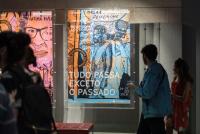 Funes’ condition contrasts with [Everything passes except the past], an international workshop about the politics of memory, promoted by the Goethe-Institut, which took place over a few days of September at Culturgest in Lisbon, in tandem with the cinema programme, Re imagining the post-colonial archive. Unlike Funes' condition this event was about reflecting on the relationship between remembering and forgetting the past.
18.02.2020 | by Inês Ponte
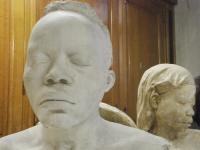 One of the other ways in which you see coloniality reemerge, is precisely in the mission the museum ascribes itself. "Africa" is an object of study while the idea of representativeness and the desire to be a window on a continent are the basic epistemological principles of imperialist logic. The scenography continues the "chosification" and "domestication"
23.10.2019 | by Marta Lança
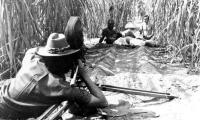 What we are looking for is a critical conscience for representations that are calcified or absent from the archives, building a debate about the modes of reimagination and ethical approaches – not only to those images that become archive-image but also to the image archives in their materiality.
18.09.2019 | by Maria do Carmo Piçarra
 What remains of the Hotel Império, beyond an Asian allegory of Portugal? The clustered ruins of a building evoke the memory of an ancient, faded splendour which survives only in residues. But it is more an aesthetic image than a documented, known fact. Haunted ghosts survive of a house, more imagined than real, that never fully belonged in a Macau now disputing its precarious future through an iniquitous debate with a crushing and soulless modernization. The ideal conditions, then, to open up space for a pungent and inexorable nostalgia. It is destined to be the only thing to remain.
09.07.2019 | by Roberto Vecchi
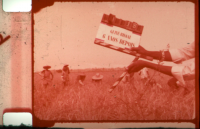 This article reads Amílcar Cabral’s much under-studied early soil science as a body of work not dissociable from his project of liberation struggle against Portuguese colonialism in Guinea-Bissau and Cape Verde. Drawing on research situated within an artistic practice, the article explores the definitions of soil and erosion that Cabral developed as an agronomist, as well as his reports on colonial land exploitation and analysis of the trade economy, to unearth his double agency as a state soil scientist and as a ‘seeder’ of African liberation.
28.02.2019 | by Filipa César
 The book condenses some important aspects of the project. Its authors are not made explicit, pointing to the collaborative nature of this effort of rescue and rereading. But it also ends up suggesting that this living process of documenting complicates the very notion of authorship as a sovereign gesture with the authority to determine how images are exposed (or concealed), or to guide interpretation and impose meaning.
12.02.2019 | by Miguel Cardina
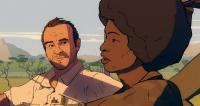 Em Mais um Dia de Vida, encontramos uma estética hollywoodesca, de construção e celebração do herói Kapuscinski. Terá a mais valia de dar a conhecer a outros públicos (em particular ao mais jovem, pelo estilo de filme de ação) o xadrez político regional e internacional que se jogava em Angola. Porém, ao centrar a narrativa de forma tão redutora na figura do ‘herói jornalista’, o filme não responde à evocação de Carlota, ficando suspenso num jogo dúbio de uso (e abuso) da memória e do esquecimento.
21.01.2019 | by Hélia Santos
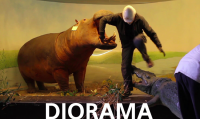 “Palimpsest of the Africa museum” documents the moving of the Africa museum as an esthetic mourning process, shows the insanity of the alterations and reveals through the eyes of the Belgian African Diapsora what the renovation really puts at stake: the decolonization of the Self.
11.01.2019 | by Matthias De Groof
 We would like to invite you on a journey. Not to cross the ocean but to plumb its surface. Forget the solid and luminous history of continents and their lighthouses that tear into the night with dazzling certitudes. Enter instead into the soft shadow of the depths, on the other side of the opaque mirror of water, into an endlessly changing landscape that ignores the old borders and bodily limits. Liquid movement of subversion, waves of voices as well as radio waves, telepathy. Space is the place. This is the place for no monuments other than the bones of those thrown overboard. Migrants whose only compass is despair, pregnant slave women who fertilize the ocean depths.
20.08.2017 | by vários
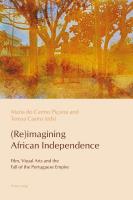 the aim of (Re)Imagining African Independence. Film, Visual Arts and Fall of Portuguese Empire is not to undertake an exhaustive survey and analysis of the filmic and audio-visual materials related to the Portuguese post-colonial situation. This collection of essays proposes, more modestly, and first of all, to contribute to a better knowledge of political propaganda films shot during and straight after the liberation wars. Shot by African and foreign filmmakers in different contexts and according to different agendas, these films allow us to explore such diverse questions as how the liberation struggles and Portuguese colonialism were envisaged according to opposing cold-war and geopolitical rhetorics, or how the newly independent countries imagined themselves as nations.
10.07.2017 | by Maria do Carmo Piçarra and Teresa Castro
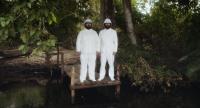 By systematically deconstructing the travel logs and journals of European explorers, scientists and traders who wandered through tropical Africa in the late 19th century, proves that these documents were often idealized or inaccurate and that, most of the time, these Europeans were in a permanent state of ecstasy caused by the disease, high doses of quinine, alcohol, opiates and other drugs.
14.03.2016 | by António Pinto Ribeiro
![Liberation struggles, the 'Falling of the Empire’ and the birth [through images] of african nations](https://www.buala.org/sites/default/files/imagecache/thumb/2016/01/filmerdc.jpg "Liberation struggles, the 'Falling of the Empire’ and the birth [through images] of african nations") The fortieth anniversary of Portuguese decolonisation of Africa has acted as a catalyst in discussing how Portugal ‘imagined’ colonial politics through moving images and how these propagandist portrayals began to be questioned by the Portuguese ‘Novo Cinema’. This can be seen in works that were censured and prohibited. Portuguese colonial cinematographic representations were later challenged by films made in the context of the liberation movements and by images that emerged out of the national cinematographic projection (Frodon) of the new Portuguese-speaking African countries.
The fortieth anniversary of Portuguese decolonisation of Africa has acted as a catalyst in discussing how Portugal ‘imagined’ colonial politics through moving images and how these propagandist portrayals began to be questioned by the Portuguese ‘Novo Cinema’. This can be seen in works that were censured and prohibited. Portuguese colonial cinematographic representations were later challenged by films made in the context of the liberation movements and by images that emerged out of the national cinematographic projection (Frodon) of the new Portuguese-speaking African countries.
14.01.2016 | by Maria do Carmo Piçarra
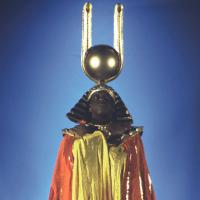 From a queer perspective, their analysis through the prism of the intersection between different categories of power, such as race, gender, and sexuality is certainly of great interest, as is realizing that both have influenced, and still influence, several queer "black" visual and musical artistic expressions, in the USA and the UK as well as in Jamaica, such as soul, hip hop, rap, bouncing, voguing..
09.07.2015 | by Ricke Merighi and Pedro Marum
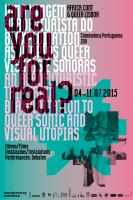 We resume our exploration of African queer cinema, thus extending the Queer Focus on Africa cycle featured in the Queer Lisboa festival last year. This time, we’re leaving Africa proper behind for the American and British world, thus reiterating one of our premises... the extension of "African" and "African-ness" that is part of AFRICA.CONT, a cultural force abroad in the world, much as a current in the ocean: integral to the whole but with movements and temperatures all its own - in the beautiful imagery of Achille Mbembe. We are certainly eager to explore the realities that this current embodies in its Central and South American, European and Asian diasporas.
25.06.2015 | by José António Fernandes Dias
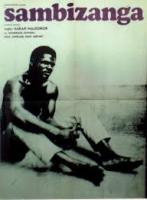 How MPLA’s ideology, in particular its Marxist-Leninist values, shaped Sambizanga? In which ways the film was shaped, by both Maldoror and the MPLA, as a piece of propaganda, in order to gain international recognition for the injustice of the Portuguese rule in Angola and credibility for the MPLA in the international community. Maldoror has said that she tried to accomplish three things with Sambizanga: capture a particular movement in the history of the Angolan liberation struggle; create a film that would educate Westerners to the situation in Angola; and tell the story of a revolution from the perspective of a woman. This dissertation will argue that these three aims can be linked to the propagandistic elements of the film and the ideology of the MPLA.
04.06.2014 | by Alice Breitmeyer