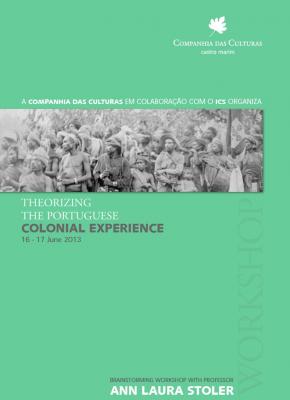
This closed workshop is designed as an informal brainstorming meeting in dialogue with the work of Professor Ann Laura Stoler, under the following common, general, issues: What are the mutual interferences, tensions, productivities, silences, ignorances, gaps, influences between the empirical and conceptual specificities of studying the Portuguese empire, and the wider international literature on the colonial and post-colonial? How, in short, does the study of the Portuguese colonial experience interfere with old and emerging theories of colonialism and post-colonialism?
OR
Este Workshop fechado está desenhado para promover o diálogo em torno ao trabalho de Ann Laura Stoler, em relação com as interferências, tensões, fissuras e influências existentes entre o trabalho empírico e as especificidades conceptuais do estudo do Império Português, e a bibliografia internacional sobre o colonial e o pós-colonial.
Entrada Livre sujeita a inscrição. Infos: Ricardo Roque <ricardo.roque@ics.ul.pt>
PROGRAMME
SUNDAY, JUNE 16, 2013
AFTERNOON
13h45 – Welcome
Eglantina Monteiro / Cristiana Bastos, Ricardo Roque, Manuela Ribeiro Sanches
14h00 - 14h45
The uses of the archive: some thoughts on colonial images and postcolonial melancholia.
Manuela Ribeiro Sanches (CEC-FLUL)
14h45 - 15h30
Empire cinema: disruptive colonial representations through Estado Novo films.
Carmo Piçarra (ICS-UL/ISCTE)
15h30 - 15h45 – Coffee Break
15h45 - 16h30
Beauty pageants and imperial power: intimacy and sexuality in the late Portuguese Empire.
Marcos Cardão (CEHC-IUL)
16h30 - 17h15
Art History, Postcolonial Theory and ‘Lusophone’ Contemporary Art.
Ana Balona de Oliveira (CEC-FLUL/IHA-FCSH-UNL)
20h00 – Dinner at Companhia das Culturas
AFTER DINNER EVENT:
Contemporary films by Filipa César and Daniel Barroca, O importante é ligar a cabeça à mão /’The important is to link the head to the hand´, vídeo e desenho
2008-2011
Filipa César, Cacheu, vídeo 10’
Selected and presented by Eglantina Monteiro and Nuno Faria
DAY 2: MONDAY, JUNE 17
MORNING
11h00 - 11h45
Were Portuguese citizens all those who were born in Portuguese territory? Fluid narratives on imperial citizenship.
Cristina Nogueira da Silva (FD-UNL)
11h45 - 12h30
Luso-tropical horrors: vulnerability, savagery, and the Portuguese in Timor.
Ricardo Roque (ICS-UL/University of Sydney)
12h30 -14h00 - Lunch
14h00 - 14h45
Bringing them in while keeping them out: colonial medicine, indigenous subjects and local agents.
Cristiana Bastos (ICS-UL)
Final comments & discussion: Ann Laura Stoler (New School for Social Research)
END OF WORKSHOP
companhia das culturas - uma casa rural de charme
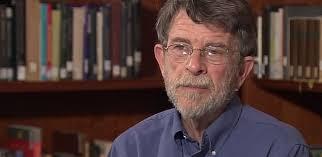

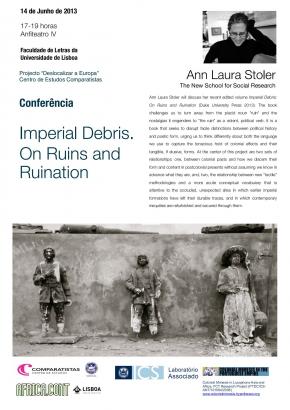 Ann Laura Stoler will discuss her recent edited volume Imperial Debris: On Ruins and Ruination (Duke University Press 2013). The book challenges us to turn away from the placid noun “ruin” and the nostalgias it engenders to “the ruin” as a violent, political verb. It is a book that seeks to disrupt facile distinctions between political history and poetic form, urging us to think differently about both the language we use to capture the tenacious hold of colonial effects and their tangible, if elusive, forms. At the center of this project are two sets of relationships: one, between colonial pasts and how we discern their form and content in postcolonial presents without assuming we know in advance what they are, and, two, the relationship between new “tactile” methodologies and a more acute conceptual vocabulary that is attentive to the occluded, unexpected sites in which earlier imperial formations have left their durable traces, and in which contemporary inequities are refurbished and secured through them.