Memory, cinema and reparation: interview with Dulce Fernandes about Tales of Oblivion
During the excavation for a parking lot in the city of Lagos, the remains of 158 African people were founded, victims of the Portuguese slave trade. Buried among trash, without any type of ritual. Those erased lives came to the public almost silently, only to vanish once again into collective oblivion. Contos do Esquecimento, a film by Dulce Fernandes, was born out of the shock of discovering a place of historical significance - the final destination of the first enslaved people brought from Africa to Portugal, in 1444 - and the realisation that this very spot had been taken over by a parking lot, a mini-golf course and the persistent institutional silence.
Over the course of almost a decade of investigation, writing and montage, Dulce Fernandes created a film about the continuous presence of the past on the present. More than a piece about what happened, this is a film about how it continues to shape the social and racial structures of our daily lives. Between contemporary images, colonial archives, carefully chosen words and a gesture of ethical cinema, Contos do Esquecimento is intended as a space for questioning, memory and possible reparation. In an interview with me, the director talks about her process, the discoveries in the archives, the symbolism of Lagos, the collective difficulty in facing up to the history of the slave trade and slavery in Portugal, and the importance of cinema as a mechanism for raising awareness, for reflection and for symbolic justice.
At what point did you realize the scale and the historical silence from behind this excavation in Lagos? What made you decide to transform it into a movie?
The excavation started in 2009 and lasted about six months. I became aware in 2013, when I was in Lagos and I realized that occurrence was already in the past: the excavation was concluded, the parking lot was already operating, the mini-golf field was almost done. The creation of the film was, for this reason, very long. It was only concluded in 2023, almost a decade later. It was an extensive journey of investigation, writing, development and, also, of montage. Going back to that initial moment, to when I first discovered the place: I didn’t have a single sudden realization about what that place meant. It was more a series of consecutive moments of surprise, shivers, outrage, which I was confronted with, leaving me with the perplexity and violence of what happened there, and the way that space was treated.
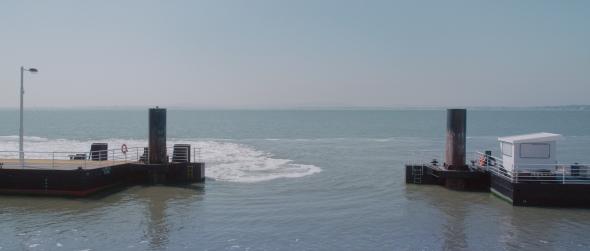
That location is, in a geographical and material point of view, the starting point of what would become the transatlantic slave trade for enslaved Africans. It was there, in 1444, where the first people kidnapped and forcibly brought from Africa were disembarked. We have documentary sources, such as Zurara chronicle, that describe this moment, as well as the date of the skeletons found in Lagos confirm this time span.
This were the first people brought under conditions of slavery, the beginning of a process that would last more than 400 years, with millions of lives destroyed, with the consolidation of a plantation economy and the massification of the Atlantic slave trade. Lagos is, in this sense, a place of historical significance that is truly unique in the world. There is no other place with this very same founding mark. It is also a space of great symbolic significance. It was found there the remains of 158 people - buried in the middle of trash. An impressive number, and it is believed that there is even more on the still unexcavated sites. And yet, all this historical, archaeological, and symbolic significance does not correspond in any way to what has been done at the site. First a parking lot, then a mini-gold field. Later on a museum, but that also does not properly reflect the extraordinary importance of that place.
The collective silence around that place is blatant, and there are many questions that continue to cause perplexity. It was in this context that the film took shape, but in a long and difficult process defined by numerous challenges: how to cope with the violence of this story, with the erasure of history, the absence of images, with sources marked by oppressive narratives. And, above all, how to find my place to tell this story.
What is the significance of the memory of slavery for the present day?
This topic is extremely relevant for today, because the legacy of this story is the structural racism in our present. Therefore, it is so important to comprehend what happened, how everything started, and how we got here. We are living the after life of slavery. The past of the slave trade continues to shape the power structures and the racial divisions that rule us today. For this reason that talk about 1444 and Lagos, this real, tangible place, is also to speak about the present, and the urge to transform it.
For which reason do we continue to have so much struggle to face this chapter of our history?
It is clear that this difficulty is deeply tied to the absence of historical memory regarding the transatlantic slave trade and the central role that Portugal played in that process. Portugal had a fundamental role: it was the country that started and expanded the slave trade through the Atlantic, in a never seen before scale. The plantation economy started to be tested in Madeira, with sugarcane cultivation, and it was later on implemented and extended in Brazil. It is estimated that Portugal had trafficked around six million people, taken away from Africa and transported in ships with the Portuguese flag, and after that, the Brazilian.
Therefore, Portugal`s major role in slave trade history is undeniable - and, because of that, is hard to face it. There is a vast obstacle in embracing history, since it collide with dominant narrative of “lusotropicalism”: the idea of the benevolent colonizer, abolition pioneer, of racial peace in the empire, all of that intertwined with the myth of Discoveries, of the great navigators and a national identity built around glory and heroism.
The confrontation between myth and reality creates a tension that is difficult to solve. And to this day, it has not been possible to make that transition in a profound way. I believe that the main reason is in the fact that we live in a racial system deeply rooted, hyperstructural, hard to disassemble, that maintains a certain stratification of power and privilege, which makes this dismantling uncomfortable to those who benefit from it.
Talking about the traffic of enslaved people imply, inevitably, talking about current racism. The two are closely linked. The scale, the duration, and the historic consequences of the slave trade are deep and violent, and continue to be silenced or omitted out of the official narrative and the collective memory.
What is still preventing us from truly accepting this?
Honestly, I don`t know the ultimate answer to explain why we still have not managed to get past this stage of denial. Maybe we are not even in denial, maybe it is a “pre-denial” phase, or a collective fantasy, fed by lusotropicalism. Perhaps, these two realities - fantasy and denial - coexist as two sides of the same coin.
I believe that a possible approach would be to stop treating these issues solely as a moral or personal problem, and start to see it as a political matter. If we manage to look at this system as something that does not serve our values or our humanity, we could reject it in a clearer and more conscious way.
But, of course, all of this is an ongoing construction, with progress and relapses. An, until now, we have seen far too many setbacks. Still, it is along this path despite the uncertainties, that we must continue to try to move forward.
This history rarely appears on curriculums, public spaces or museums. Do you see signs of interest and change at the film screenings and discussions?
I have, without doubt, noticed signs of interest. But I also have the consciousness that the public that comes to watch this film is, for the most part, an audience already empathic and interested in this matter. For this reason, I have a profound interest for this film to reach a wider audience, specially for school and educational contexts. I believe that teachers, in particular of History, frequently miss tools and resources that help them to approach topics such as racism and slavery in an informative and sensible way. The issue of school curriculums and the teaching of history is absolutely central. If this doesn’t change we will continue to perpetuate the same dominant narrative, making them invisible or distorting these stories. This seems to be the main transformation needed.
Of course the public spaces and museums also need to change. Some museums in Portugal have already started this process, inviting activists and artists to revisit and reinterpret their collections, often consisting of items brought back in the context of exploitation, enslavement or theft.
It is a movement in the sense of creating new perspectives about these items and their history. But there is still a long way to go. There are many municipal and private collections that need to be examined critically. I am not a museum or collection specialist but, for example, I have visited the Casa de Bragança museum, in Vila Viçosa, dedicated to king Dom Carlos, where there is a vast collection with African pieces. Many of them were brought, and it is not known exactly under what circumstances, from expeditions made by the king in African territories. probably under colonial context.
Therefore, besides the major museums, there are many other collections that require investigation and serious historic contextualization. For public spaces, this matter is equally urgent. Take the case of Lisbon, where we have not yet managed to create the Memorial to the Victims of Slavery. The Djass project, approved since 2017 - with a defined location and the art Plantação, by artist Kiluanji Kia Henda - have been constantly postponed due to a lack of political will. Just like the mini-golf case in Lagos, the difficulty to move forward reveals the discomfort and struggle with this part of our history. In Lagos, there is also an ongoing attempt to create a memorial.
Inês Beleza Barreiros‘ s article “Contos do Esquecimento (ou das listas da nossa vergonha)” indicates that the film refuses “the dizziness of the empire’s visuality” and avoids violent images. How did you find the balance between showing the historical violence and avoiding the reproduction of it through images?
This was, undoubtedly, one of the main questions throughout the process of the film, not only in terms of images, but also in terms of words, sounds and content in general. The story that we approach is marked by absolutely terrible violence. And the archives—both the written sources and the existing objects and images—are impregnated in that same violence, that continues to be current and operating. This violence has not ended. It is still present and active, and because of that, it is extremely difficult to show something without that violent undertone resurfacing. Showing something can, in itself, be an act of violence.
My primary concern with this film was to not cause any additional or unnecessary suffering, as well as, of course, drawing attention to this story. There was always an intention to preserve the memory, but the focus was, above all, on not causing any further pain.
Addressing the history of slavery, traffic and racism is always delicate, precisely because these violences are not only in the past. Racism is still between us. It continues to operate. This history, when told, hurts us and affects us every day, regardless of the place we occupy inside the system of structural racism. Racialized people are affected in a more violent manner. In my case, as a white person, I am affected in a less direct way, but that doesn’t mean I’m not still part of that system and its logic.
I believe that, through the language of cinema, I have managed to find ways of avoiding the reproduction of the violence contained in the source material and the images. The time of montage was essential: the film is very slow-paced, the shots are long, and the more violent scenes are shown at a pace that allows them to be watched and digested. Following these texts there is always space for contemplation, allowing the viewer to reflect about what they saw and heard. The film’s soundscape itself helps to transport us into a non-linear sense of time, in which different layers of time overlap. It also takes us to invisible presences that continue to inhabit the places of our everyday lives.
There was also a clear intention of appropriation of the archives, especially the written sources. As Saidiya Hartman points out, for enslaved people, the archive is always an encounter with violence: they appear in the records only when they are bought, shipped or landed. It is never they who leave behind their own writings or their version of the story. It is always the oppressor, the enslaver, who writes.
Therefore, this file is inevitably contaminated by this historical violence, and still existing on the present day. But I felt that I had the right to make it my own, to take from it whatever served the film’s purpose: to tell this story in a free, expanded and contemplative way. It had hundreds of extraordinary texts, and I tried to choose excerpts that would suit both the individual moments and the film as a whole. In some cases, it was necessary to adapt the language of the sources, for example, modernizing ancient Portuguese that was incomprehensible, always with the greatest accuracy and without distorting the original meaning. It was important to keep the fidelity to the archives. The film counted with a historical consultancy. Although it is not an academic work of history, I felt it was essential to maintain a high degree of rigour and responsibility in the way I handled sources and memory.
The film confronts directly the city of Lagos with its past, the contrast between the slavery memorial (to be built) and a mini-golf course built on the same site. What does that symbolize?
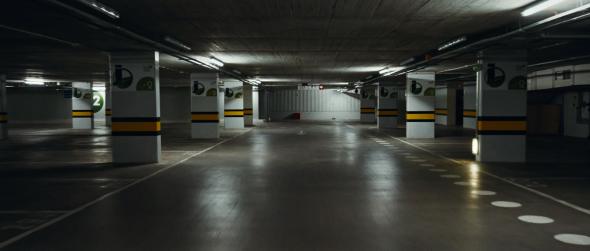
In my opinion what was done there - the parking lot, but especially the mini-golf course - is a very clear metaphor of Portugal`s denial of its role in the transatlantic slave trade, as well the denial of racism in our present day. And because of that, it was hard, at the beginning, to figure out how I could construct a narrative, how to make a film based on that reality. Since the location itself was a completed metaphor, it represents the collapse of all the historical and symbolic layers that coexist there, a sort of systematic erasure. It is precisely this overlapping of silences that makes that place so meaningful.
The city of Lagos carries a heavy responsibility, maybe even unfair for the local power, that certainly is under pressure from all sides. But this is the reality. Lagos has, right now, an ongoing process to create a memorial to slavery. The original idea was to build this memorial right there, on that place, along with an interpretive centre. This was before I started to work on the film, in collaboration with the Portuguese Committee of the Slave Route, an UNESCO project. However, all those initiatives were abandoned, altered or postponed, according to the perspective. In the end, a museum was built, not on the original site, but further down, next to the pier.
This museum has, itself, various problems, mainly in terms of content. The way it interprets, processes and communicates the legacy of the archeological discoveries in Lagos raise many questions. There is no indication of racism - which reveals the - huge difficulty, in Lagos, to approach this matter. This silence is present in all the institutional communication and the reflection that has been done about the archeological finds.
This represents one of the main obstacles to a real process of reflection and transformation in that place. On the one hand, there is a museum that omits; on the other hand, the only feature marking the site was a sign detailing its morphological and historical features, such as the streams and the leper colony that once stood there. The mention of individuals with “Negroid features” (expression that is considered today extremely offensive, heritage of racist vocabulary of the XVIII century) was done in a minimal and superficial way, without any link to the importance of what had been found there. This sign has since been removed. The information I received was that she was to be replaced, but the last time I was in Lagos, this summer, there was still nothing.
So, as far as I’m concerned, currently there are no signs at the place that indicates what happened or what was found there. There is an ongoing process for a memorial, promoted by the City Council, but it is not known who is involved. There is speculation about a competition for ideas, but, between the many specialists, academics, activists, researchers and artists that have been thinking about these issues for years, I don’t know of anyone who is taking part. It seems like an opaque process to me, and I think the Council would have everything to gain by making it more transparent and inclusive.
About the mini-golf field: for me, it is an absolutely fundamental matter. It is extremely offensive that a commercial leisure facility exists in a location of such historical significance. The mini-golf course is currently operated under a lease agreement with a private company, with the duration of 15 years, renewable for 5 more years. Therefore, the contract ends in 2027. I hope the City Council clarifies their intentions regarding this renewal. It seems to me that the simplest and most respectful solution would be not to renew. There is no financial damage, it would be enough to let the contract run its course and use that time to seriously rethink what to do there.
Of course, there are financial limitations and other constraints, but solutions can always be found. Before the excavations, that place was a semi-wild olive grove, and this landscape could be restored. Even without substantial resources, it is possible to dignify the site in a symbolic and meaningful way. Not everything needs to be monumental or expensive, the essential is that the historical importance of that space is recognized and treated with the dignity that it deserves.
The film combines colonial archives with contemporary images, breaking the separation between past and present. What have you found in the archives during the investigation that surprised you the most?
Actually, the film has very few moments in which the files appear - and that was intentional. These moments are very specific and punctual, because the film is not intended to be a piece about the past. It is, above all, about the present. About how everything that happened continues to manifest itself, resonating and affecting our day-to-day lives and our present. That’s why, for me, it was essential that the films were not created based on historical images, photographs or archive documents. I wanted to make a film that could bring us to the present ,that would confront us with this historical continuity and its existing traces.
However, of course it had an in-depth investigation, both for the archives that ended up included in the movie, as well for all the work of contextualization and construction of the historical narrative centered in Lagos and the transatlantic slave trade.
It was a research that, for me, was new. I am not a historian nor do I usually work with archives. And what I found, contrary to the usual narrative, was that there is, in fact, a great amount of documentation. There is a generalized idea that a large amount of information was gone with the 1755 earthquake, that very little was preserved, that everything that existed was already studied and catalogued. But what I realized is, despite inevitable gaps, there exist an abundance of sources and documents which are still to be worked on, to be interpreted, to be transformed in accessible historical knowledge, to be integrated into school curriculum and to be transmitted to the public.
And that is precisely why, in Portugal, we go through 12 years of school without knowing the name of a single slave ship, a single enslaved person, or a single revolt by enslaved people. We don`t even know important number about slave trade.
For me, it was especially surprising to be confronted with the estimation - today very consensual and documented, that Portugal trafficked about six million African people. People forcibly taken away and transported on Portuguese ships (and, later on, Brazilian), for centuries. It is an absolutely terrifying number. And yet, this fact is not part of our common knowledge; it features neither in the school curriculum nor in the national historical consciousness. And that is deeply shocking.
This number is not a speculation: is the result of a broad work of research, namely through the database Transatlantic Slave Trade Database, coordinated by academic centers of United States, but without the contribute of historian or researchers of Europe, Africa and Americas. A strict and collaborative work, based on preserved documents in archives of the whole Atlantic space.
Therefore, maybe the most surprising finding of my investigation was that: realizing that there is knowledge, there is data, there is documentation, but there is no transmission or integration of this knowledge in our collective memory, our education, our historical culture. And that says a lot about the silence and erasure that still persist.
Can cinema be a form of reparation?
I do believe that cinema can be a form of reparation. In fact, any way conscious intervention in the world can have this potential. In the case of this film, particularly, there is a clear intention to work memory as a reparative gesture - a rescue, a reconstruction, a reconciliation.
There is a context preoccupation in the film to remember the dead that had no rights to a burial ritual, in identifying the sites where they were disposed of, in establishing the actual numbers involved in the transatlantic slave trade, and in showing how the spaces we occupy today continue to be shaped by that past. Bringing all of that for the present, for contemplating the current moment, it is for me, as a filmmaker, a reparation gesture.
But, in this case, there is also an even more specific dimension: the film with the memory of 158 people whose remains were found in that place. And, in this sense, reparation is also personal, concrete, aimed at these lives that were erased. It was within this context that the major internal debate emerged regarding the images of the boxes in which the bones are kept. The decision to include them in the film was neither easy nor automatic.
We reflected a lot: would it be offensive to show those images? Would it be a new way of objectification? Would we be disrespecting the memory of those people? Would it be violent for the people that consider their ancestors?
This debate was made inside the team, but also with various external sources - academics, activists, artists, friends, family - people with different perspectives and experiences. And this is the conclusion that we came up with: we could only include those images if we made it in a dignified, proper way, and which, in fact, would carry with it a dimension of symbolic reparation.
While editing the film, we tried to create a cinematic moment that would function almost like a funeral ritual - something these people have never had. The shots are long; the sound is merely ambient, almost complete silence. The viewer is invited to look at those boxes in a contemplative way, in a moment of reflection. We wanted to establish a moment of silence there, just as one does in tribute to those who have died.
Later in the film, there is also a sequence featuring Birago Diop’s poem, Os mortos não estão mortos - The Dead are Not Dead. It is a reminder of the continued presence of the ones who are gone: they are on the beach, in the forest, in the cabin – they’re with us. This sequence is also intended to function as a prayer, as a form of presence and remembrance, and, in that sense, as a form of reparation. Of course, not everyone experiences the film in the same way. It doesn’t always work. Some people connect with this ritual dimension; others do not. And that is part of the cinema experience. But this was, in a conscious way, the intention in which the film was created. Yes, I do profoundly believe that cinema, in this case, can be a form of symbolic, ethical, and sensible reparation.
CONTOS DO ESQUECIMENTO - FORGOTTEN TALES
documentary | 63’ | 2023
SYNOPSES
On a hot summer morning of 1444, in the fishing village of Lagos, south of Portugal, a group of African people disembarked. In the field next to the harbour, they were handed over as slaves to local nobles and merchants. For the next 400 years, more than six million Africans were enslaved in Portuguese ships for Europe and the other side of the Atlantic.
On a rainy winter afternoon of 2009, in Lagos, archaeologists that excavated the site where an underground parking lot was being built, started to find human skeletons. Working on site for the next five months, whilst the car park was being built around him, archeologists discovered the skeletons of 158 enslaved African men, women and children. Their bodies had been dumped in a 15th-century rubbish dump.
Intertwining these two stories, Contos do Esquecimento combines stories of violence and brutality from the past with images and sounds from the present. Evoking what happened in these places and revealing past memories. This is a cinematic landscape where we have no choice but to consider how the present continues to be shaped by the history we carry within us.
Film credits
Script and Direction: Dulce Fernandes
Photography Direction: Paulo Menezes
Sound: Armanda Carvalho
Film Editing: Mário Espada
Original Music: Xullaji
Voices: Dulce Fernandes, Lucy Shaw Evangelista, Denise Viana
Sound mixing: Tiago Matos
Colour correction: Mafalda Aleixo
Producer: Ansgar Schaefer, Pandora da Cunha Telles
Co-producer: Pablo Iraola
Executive Production: Elsa Sertório, Dulce Fernandes
Production: Ukbar Filmes, Kintop
Distribution: Madame Filmes


