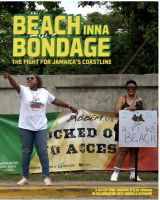
 Its beaches are the final surface of a deep geological and political stratigraphy, where the history of extraction continues under new names. I began this journey at the edge of Europe, where the continent folds into the Atlantic, and the maps run out. I ended it on the other side of the same water, where the maps were always drawn by someone else, for someone else, with someone else’s interests marking the center. To turn the map upside down, as I suggested at the outset, is not merely a metaphor: it is an epistemological act, a way of asking whose knowledge counts, whose memory is archived and whose is submerged. The sea between Lisbon and Kingston is not empty. It is the most crowded place on earth, full of unreported deaths and stories. The time has come to gather them, to bring them back into view, and to listen, carefully, tirelessly, to the voices that history tried to drown.
I'll visit
19.06.2026 | by Carlotta Pisano
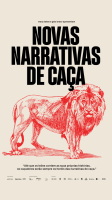 New Hunting Narratives does not need to be the perfect anthology. No first opening needs to reach such a high bar. But the series is born from an ancestry of burnt archives, interrupted languages, neighbourhoods filmed by others, poorly translated bodies, talents without rooms, belated criticism, distracted television networks. And when something is born like that, in the right place, before an audience that responds, it goes from a mere episode to a cultural foundation.
Afroscreen
18.06.2026 | by Pedro José-Marcellino aka P.J. Marcellino
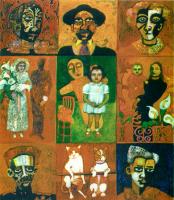 Stories told by women from Santo Antão about women-cats-witches and midwives of mermaids that go to the bottom of the sea, to the palace of the “enchanting” to provide their services by receiving three stones that will turn into gold. I really like this universe, and I take the opportunity to create characters for my art. Today, I work on a series based on the abandoned boats that existed in Galé (Cova da Inglesa) and the shipwrecked boats in the seas of Cape Verde. I believe that each artist should look within themselves for authenticity and get “contaminated” with the atmosphere around them: so they will reach a universal projection.
Face to face
11.06.2026 | by Marta Lança
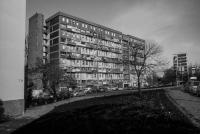 In Lisbon, we can identify around 250 streets that, in one way or another, have colonial associations. The names given to these streets not only reflect the city’s changes but also constitute a linguistic, cultural, and political legacy of European expansion and, in particular, of Portuguese colonialism. This connection between Lisbon’s toponymy and the legitimization of the state, whose aim was to materialize and root a certain historical memory in the population (by celebrating it), is in many ways linked to the evolution of the country’s political events.
City
11.06.2026 | by João Pedro George
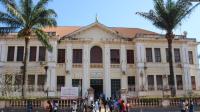 Se na primeira parte vimos como o Estado é, na sua origem, uma máfia bem-sucedida, que monopolizou a violência, então a crise guineense pode ser lida como uma luta pelo controle desse monopólio num contexto onde as instituições económicas e burocráticas são demasiado frágeis para se autonomizarem como fonte primária de poder.
To read
11.06.2026 | by Marinho de Pina
 Conceição Lima explores the challenges of being part of a nation with a history of conflict and slavery, showing readers her resentment towards the collective memory of colonial power, whilst also exhibiting hope for a legacy and future that celebrates the culture that has stemmed from this. Lima shows that only through societal remembering and global recognition can colonial memory be untangled from the legacy of São Tomé e Príncipe.
To read
08.06.2026 | by Sophia Hinchey
 On the social level, effective political accountability is equally indispensable in the creation of public policies to promote culture and the arts that combat exclusion and segregation, with structural effects on the lives of racialized populations, and not merely symbolic programs that are photogenic enough for reports. In this debate, we proposed to better understand some aspects of Afro-diasporic production in the fields of literature, film, and music, with special attention to women’s perspectives. Given the lack of historical documentation, it is often necessary to work with absences. As a research approach, the interrogative formulation—which acknowledges gaps that cannot always be filled — allows us to keep asking: what did they say? What did they do? What do we still not know? And perhaps also the central question: why did it take us so long to listen?
To read
29.05.2026 | by Marta Lança
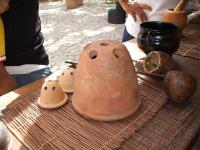 This is not merely a “politics of the belly,” but rather a matter of bringing the belly to the center of politics and, consequently, abandoning the condescending view we hold of the people. Changing our perspective on food, ingredients, and gastronomy — these “unidentified political objects” — and seeking our history through them would greatly assist us in this process of liberation and unity.
To read
29.05.2026 | by Apolo de Carvalho
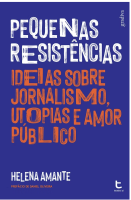 Without journalism, how would we all know what is happening in Gaza? It is true that we also learn about it through social media platforms like Telegram or Instagram, but the information often reaches us through the work of journalists, including Palestinian journalists. How would we access so many stories about mental health? And how would we connect them as a significant political phenomenon? How would we learn about the cases of femicide plaguing societies? How would we know what happened in the Zambujal neighborhood? Specifically, how would we contextualize the different narratives and information? Without journalism, there would be only images and narratives shared online, without context, from partial viewpoints that are never confronted.
To read
28.05.2026 | by Sofia José Santos
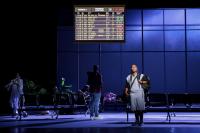 Adilson is the story of a rootless Creole. A childhood friend of Dino’s, the dancer Adilson Correia Duarte, known as Bonny and in the neighborhood as Dafos, arrived in Quarteira at eleven months old but remains a stranger in the country where he learned to walk and from which he has left only once. Adilson has never tasted the pitanga of Angola, never set foot in Cape Verde, and belongs to all three places at once without any formal ties to any of them. Angola, Cape Verde, and Quarteira are, thus, a triple belonging without recognition. Like so many other children of immigrants, he lives in this paradox: “I’ve never been there, I’ve always been here, where I’m a stranger.”
I'll visit
28.05.2026 | by Marta Lança
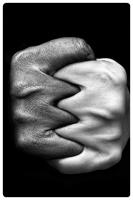 The evils of these processes are vast, and it is important to remember them: the displacement and death of thousands of people; brutal physical and psychological violence; continuous humiliation; the systematic rape of black women, which also led to racial mixing; the mandatory assimilation into what was considered “superior culture”; internal divisions; attempts to erase and ban the expression of African languages and cultures; economic and epistemological violence; racial hierarchies. This was the case in Angola and other colonized regions. I was born and raised in a country where the marks of the colonial regime endure and its vestiges remain alive.
To read
22.05.2026 | by Leopoldina Fekayamãle
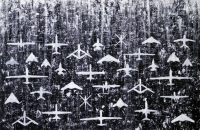 Algorithmic capitalism proposes an operating scheme that is increasingly defined by circular lines that join the two terms, producing scenarios that do not seem exaggerated to define as apocalyptic. The development of AI strengthens that plot, which becomes increasingly evident through stated strategies and actions taken, where nothing must be disguised. Everything finds an explanation in scientific – or pseudoscientific – statements that bring together absolute confidence in technology, religious beliefs, differences between human beings based on the intelligence quotient.
To read
21.05.2026 | by Stefano Rota and Rodrigo Magalhães
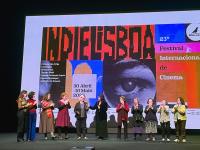 In a time of fierce competition for historical memory, in which the most extreme forces on the right try to rewrite what fascism was, the film Women of the Revolution, by Raquel Freire, is a moment of truth, a point of order at the table. Who tells our story? Who guesses the joys and the sufferings, the griefs, and the charms? Who knows what was in the heart of a child who was killed along with their family in Gaza? Who hears the birds in the morning feeling what overflows the life that fits us?
Afroscreen
21.05.2026 | by Josina Almeida
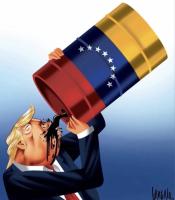 What has happened in Venezuela goes beyond the realm of internal political dispute and enters, quite explicitly, the territory of raw imperialism, undisguised, shameless and without any real commitment to democracy. Donald Trump’s speech, in which he announced that the United States would “govern” Venezuela and take control of its oil, laid bare what Latin America has known ever since it was invaded by the Europeans: it has always been about resources, trade and profit. It has never been about freedom, it has never been about human rights, it has never been about democracy.
To read
19.05.2026 | by Gabriella Florenzano
 The goal of this text is not to redefine the selection criteria of Indie — it's like the orthographic agreement, as long as there's a rule, it works. Rather, it serves as a pretext for exploring the origins of a brand-new Portuguese cinema, in search of those lost roots, that movement, that unity, even if fragile. This is despite the fact that, in a globalised world, we are all inevitably influenced on a global scale. Nevertheless, one should not underestimate the potential of one’s immediate neighbour.
Afroscreen
19.05.2026 | by Manuel Halpern
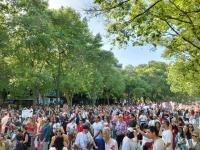 It is thrilling to feel the wave of diverse people “going out into the streets (avenues, I`m sorry) with carnations in their hands at set times”. I am a cell from this mass of water and flesh for decades, and it has been exciting to see the revolution day reactivate, gain pulse and multitude, more cause and watchwords. I recognize the 25th of April on my path, as if I practiced every day, and I have been thinking in our generation’s place: the children of the 25th of April, that came after the end of the dictatorship to put in practice freedom, with so many possibilities to blossom and always so complaining. We went through the analogical to the digital, from heroin to amphetamine, from post-Cold War to global crises, between celebrating and the fear of losing… the social State, the work, the home, the spirit.
Mukanda
19.05.2026 | by Marta Lança
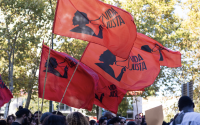 The tendency towards individualisation, the loss of meaning in collective ways of interpreting processes and formulating responses, the dominance of the ideology of success at any cost and of meritocracy – where failure is attributed to individual blame – and the constant undervaluation of physical relationships in favour of virtual ones: all of this points to an anthropological shift that reaches deep levels, including the realm of the unconscious and of dreams.
Body
19.05.2026 | by Stefano Rota
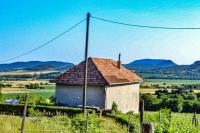 The next day, as usual, the grandmother went to lay flowers in the grave and came across the grandson's body lying on the ground, the servants who were with her manifested themselves and the spirits began to quarrel. His maternal relatives wanted him to be a servant of God, adopting modern practices to represent the family in society. On the other hand, his paternal family wanted him in the hut, serving the family spirits. The shouts reached the village and everyone watched that spectacle of spiritual conflict.
To read
07.05.2026 | by Edna Matavel
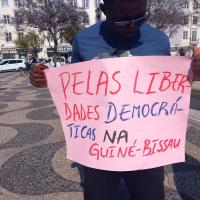 Birthplace of one of the greatest Pan-Africanist thinkers of all time, Amílcar Cabral, Guinea-Bissau occupies our collective memory, just like Toussaint’s Haiti, Dessalines, Boukman and Cécile Fatiman, a place reserved for the great luminaries of the history of Pan-African revolutions and struggles. Therefore, we can not be indifferent to the extreme violence that the people of this nation, forged in the struggle, has been facing in the hands of a State ruled by scammers, kleptocrats and murderers, whose Berlin-style agenda has been nothing but the destruction of that ‘broad road of hope’ built by the greatest collective endeavour this people has ever undertaken: the struggle for independence.
Mukanda
01.05.2026 | by Apolo de Carvalho, Alexssandro Robalo, Sumaila Jaló and Yussef Marta
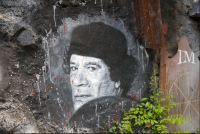 For many in Libya, the Jamahiriya remains a reference point of lost sovereignty and stability. Such views are reinforced with every new revelation about Libya’s subjugation to outside forces. One of the latest insights into this subjugation came when the US Department of Justice released documents revealing that, during NATO’s intervention in Libya, Jeffrey Epstein worked with former British and Israeli intelligence officers in an effort to access billions in Libyan state assets frozen in Western countries.
To read
30.04.2026 | by Owen Schalk