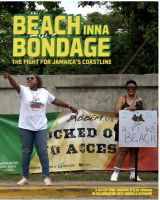
 Its beaches are the final surface of a deep geological and political stratigraphy, where the history of extraction continues under new names. I began this journey at the edge of Europe, where the continent folds into the Atlantic, and the maps run out. I ended it on the other side of the same water, where the maps were always drawn by someone else, for someone else, with someone else’s interests marking the center. To turn the map upside down, as I suggested at the outset, is not merely a metaphor: it is an epistemological act, a way of asking whose knowledge counts, whose memory is archived and whose is submerged. The sea between Lisbon and Kingston is not empty. It is the most crowded place on earth, full of unreported deaths and stories. The time has come to gather them, to bring them back into view, and to listen, carefully, tirelessly, to the voices that history tried to drown.
I'll visit
19.06.2026 | by Carlotta Pisano
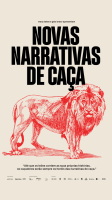 New Hunting Narratives does not need to be the perfect anthology. No first opening needs to reach such a high bar. But the series is born from an ancestry of burnt archives, interrupted languages, neighbourhoods filmed by others, poorly translated bodies, talents without rooms, belated criticism, distracted television networks. And when something is born like that, in the right place, before an audience that responds, it goes from a mere episode to a cultural foundation.
 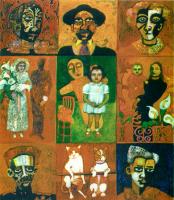 Stories told by women from Santo Antão about women-cats-witches and midwives of mermaids that go to the bottom of the sea, to the palace of the “enchanting” to provide their services by receiving three stones that will turn into gold. I really like this universe, and I take the opportunity to create characters for my art. Today, I work on a series based on the abandoned boats that existed in Galé (Cova da Inglesa) and the shipwrecked boats in the seas of Cape Verde. I believe that each artist should look within themselves for authenticity and get “contaminated” with the atmosphere around them: so they will reach a universal projection.
 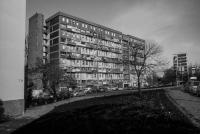 In Lisbon, we can identify around 250 streets that, in one way or another, have colonial associations. The names given to these streets not only reflect the city’s changes but also constitute a linguistic, cultural, and political legacy of European expansion and, in particular, of Portuguese colonialism. This connection between Lisbon’s toponymy and the legitimization of the state, whose aim was to materialize and root a certain historical memory in the population (by celebrating it), is in many ways linked to the evolution of the country’s political events.
 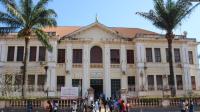 Se na primeira parte vimos como o Estado é, na sua origem, uma máfia bem-sucedida, que monopolizou a violência, então a crise guineense pode ser lida como uma luta pelo controle desse monopólio num contexto onde as instituições económicas e burocráticas são demasiado frágeis para se autonomizarem como fonte primária de poder.
 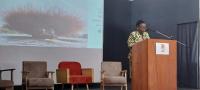 Conceição Lima explores the challenges of being part of a nation with a history of conflict and slavery, showing readers her resentment towards the collective memory of colonial power, whilst also exhibiting hope for a legacy and future that celebrates the culture that has stemmed from this. Lima shows that only through societal remembering and global recognition can colonial memory be untangled from the legacy of São Tomé e Príncipe.