 Dance Not Dance lets ghosts circulate in their truncated transience, leaving us with the task of tying up loose ends. Another of these ghosts is Valentim de Barros, who was admitted to the Miguel Bombarda Psychiatric Hospital by the fascists with a diagnosis of “homosexual pathology”. It is one of the several disabled bodies that the new dance has recovered in its affirmation of a becoming queer and becoming crip. But in these archaeologies, some absences are also felt.
I'll visit
22.02.2026 | by Rui Eduardo Paes
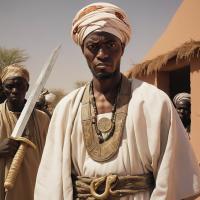 Portugal did not begin the taking. It widened the road. The desert and the ocean became parallel corridors of the same long project. The Trans-Saharan slave trade would run for twelve centuries in total. It trafficked an estimated ten million people, and yet it is barely spoken of. In the West, it barely exists as a cultural fact at all.
  The famine was, like José Vicente Lopes says, “Cape Verde`s holocaust”. The Portuguese colonial regime orchestrated this horrific crime by abandoning the islanders in various ways, even preventing them from implementing survival strategies. For example, it prohibited boats loaded with food sent by the Cape Verdean diaspora to help the starving people, to reach their destination.
  For more than 35 years, Serbian society has been in a state of continuous disintegration. Almost nothing functions as it should. The wealth that had been collectively produced during Yugoslav times, was systematically privatized, creating a narrow elite of multimillionaires and billionaires whose power is rooted almost entirely in the capture of public resources and state-funded projects.
  Amélia’s grandchildren and great-grandchildren speak many languages, have different hair colours, and hold many different passports. They have lived a wide range of experiences. Yet they are all part of the same family. When they meet, they share a sense of belonging to something beyond words, categories, or distinctions. So what is this family identity? Who knows? Even the family members themselves offer many different answers to that question.