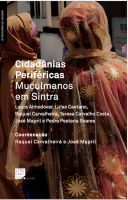
 By prioritizing an approach centered on people’s experiences, it presents itself as a humanising discipline that seeks to capture the nuances of everyday life, beyond the statistical cut-outs and social determinisms. Of course, there are structures, tendencies and politics that go beyond people’s will and that must be analysed (consider the processes of racialisation and precarisation), but a closer look at their strategies, dreams and aspirations allows us to understand the choices available to them within socially defined boundaries, highlighting their strengths and weaknesses. For this reason, this study takes specific localities in order to gain an understanding of the situation of Muslims in Sintra and does not claim to represent the Muslim population as a whole.
To read
23.04.2026 | by Raquel Carvalheira and José Mapril
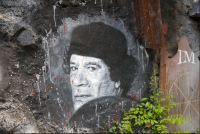 For many in Libya, the Jamahiriya remains a reference point of lost sovereignty and stability. Such views are reinforced with every new revelation about Libya’s subjugation to outside forces. One of the latest insights into this subjugation came when the US Department of Justice released documents revealing that, during NATO’s intervention in Libya, Jeffrey Epstein worked with former British and Israeli intelligence officers in an effort to access billions in Libyan state assets frozen in Western countries.
  It needs to address the fluid religious imagination of many African Christians who easily migrate from mainline Christian groups like Catholicism to Pentecostalism and African traditional religion. This means the Catholic church needs a moment of self-introspection to ask if it is really meeting the people at their points of need. Is it a church that bears the narratives and wounds of the people?
 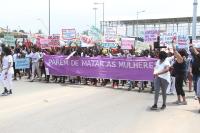 Violence such as sexual assault continue to be a factor that inhibits women's full participation in public life and access to employment. But there is also the matter of denial of their existence as citizens of Angola, which manifests itself in the difficulty of accessing civil registry records. Recently, within our women's movement, We conducted a project in the municipality of Cubal where, out of a group of about 300 women, only two or three had identification cards.
 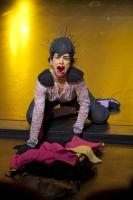 How to embrace these unstable forms, breaking out of other times? To conclude, it is worth returning to the concept of “critical hospitality” mentioned by Brandstetter in the preface. Alexandra Balona puts this concept into practice through the creation of an essayistic methodology and a critical writing that works by approximation and through engagement with the artwork, seeking to remain hospitable to its intensity.
  Renewed uncertainty around US engagement, including signals of potential funding reductions, institutional disengagement, and a second withdrawal from the Paris Agreement, has reintroduced questions about the durability of global climate commitments.
  Modern-day slavery is the lot reserved for Kenya’s youth by a government once invested in the education of the country’s young but now content to send them to foreign lands as labour exports.
  There was also a clear intention of appropriation of the archives, especially the written sources. As Saidiya Hartman points out, for enslaved people, the archive is always an encounter with violence: they appear in the records only when they are bought, shipped or landed. It is never they who leave behind their own writings or their version of the story. It is always the oppressor, the enslaver, who writes. Therefore, this file is inevitably contaminated by this historical violence, and still existing on the present day. But I felt that I had the right to make it my own, to take from it whatever served the film’s purpose: to tell this story in a free, expanded and contemplative way.
  Africa also has the potential to position itself as a hub for renewable energy and sustainable finance. With vast solar and wind resources, expanding urban centres, and an increasingly digital financial sector, the continent could leapfrog towards a greener future if investment and regulation advance together.