Beyond the Promises: Africa, Power, and the Politics of Climate Action
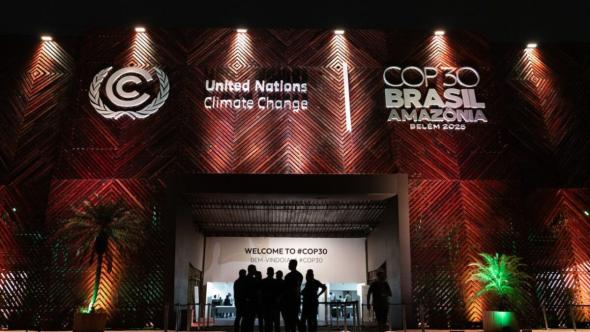
In the months since COP30 concluded in Brazil in November 2025, the architecture of global environmental governance has continued to evolve and, in important respects, to fracture. What was framed as an “implementation COP” has been followed by a period of institutional volatility, renewed diplomatic pressure, and growing geopolitical uncertainty.
In December 2025, the United Nations Environment Assembly (UNEA-7) convened in Nairobi, where governments adopted measures addressing global environmental challenges, including wildfire risk reduction, the environmental dimensions of artificial intelligence, chemicals and waste management, and the sustainable management of natural resources. The assembly also endorsed UNEP’s Medium-Term Strategy for 2026–2029, reaffirming support for multilateral cooperation. Plastic pollution remained high on the agenda, but negotiations toward a legally binding global treaty were not concluded at this session.
While the session produced broad agreements, major questions remain unresolved, including detailed financing arrangements, binding commitments, and compliance mechanisms that were not settled within UNEA-7 and continue to be addressed in other international processes. This includes how environmental action will be funded and how responsibilities may be shared among countries. It also remains unclear whether future commitments will take legally binding forms or rely on voluntary approaches, and how progress will be tracked and reported in countries with different capacities, resources, and priorities.
Beyond UNEA, the broader climate and environmental landscape has become more unsettled. The durability of multilateral progress remains contingent on political will from developed economies, a vulnerability that history has already demonstrated. During his previous administration, Donald Trump withdrew the United States from the Paris Agreement, underscoring how swiftly domestic political shifts can disrupt global climate cooperation. Since COP30, renewed uncertainty around US engagement, including signals of potential funding reductions, institutional disengagement, and a second withdrawal from the Paris Agreement, has reintroduced questions about the durability of global climate commitments.
For African states, these developments are not abstract institutional adjustments. They shape the political and financial terrain upon which the continent negotiates. The post-COP30 moment is, therefore, not simply one of implementation, but an inflection point: a test of whether a consensus-based climate regime can deliver equity in a system still marked by structural asymmetry.
Against this unsettled backdrop, the outcomes of COP30 in Belém take on renewed significance. Framed as an implementation-focused summit, it carried heightened expectations for developing countries seeking delivery rather than declarations. In the lead-up to Belém, Africa’s priorities were clear and consistent: adaptation, climate finance, and a just transition. These were not abstract negotiating positions but reflections of lived realities across the continent, where droughts, floods, food insecurity, and displacement are no longer projections but present conditions. As Dr Nana Antwi-Boasiako Amoah, Chair of the African Group of Negotiators, explained, “For the African continent, our priorities have largely remained the same over the years. What changes from COP to COP is how we pursue them and what outcomes we are able to secure.”
Adaptation was positioned as the defining theme of COP30, particularly through the conclusion of work on the Global Goal on Adaptation. Ignatius Juma, Senior Adaptation Advisor at Power Shift Africa, described the significance of the moment as both political and practical. “Adaptation remains a key priority for Africa,” he said. “This COP was very important for adaptation because it marked the conclusion of the Global Goal on Adaptation work which began in Dubai during COP28. The indicators under this programme were expected to be finalized and adopted in Brazil.”
On paper, the adoption of adaptation indicators suggested progress. Indicators are meant to allow countries to track adaptation efforts and move from broad commitments to measurable action. In practice, however, the process exposed deep tensions between technical expertise and political accountability. Dr Antwi explained that Africa’s concern was not with the indicators themselves, but with how they were developed and what they implied. “One of Africa’s main concerns was that the indicators were developed largely by experts, without sufficient opportunity for political interrogation by Parties,” he said. “At the end of the day, it is countries that must implement these indicators.” Those concerns were rooted in substance rather than procedure.
Several proposed indicators were viewed by African negotiators as prescriptive or intrusive, particularly those related to means of implementation. One such proposal sought to assess national budget allocations for adaptation. African countries opposed it strongly. “Tracking domestic financing for adaptation is not acceptable, because local adaptation financing is a government budget-related issue,” Dr Antwi said. “What you have to do is look at the international flows.” From Africa’s perspective, requiring domestic reporting at the global level contradicted the principles of the Paris Agreement by shifting accountability away from historic polluters and toward countries already bearing the brunt of climate impacts. The indicator was ultimately excluded, as was another proposal related to public procurement policies that African negotiators argued would allow external actors to influence domestic decision-making.
Juma described these outcomes as important, if incomplete, gains. “These were important wins,” he said, while acknowledging that the final framework remains imperfect. That recognition led to the launch of a new two-year process, the Belém–Addis Adaptation Vision, intended to review and refine the indicators. For Dr. Antwi, the continuation of the process is critical. “We felt that more work needs to be done,” he said.
If adaptation indicators offered cautious optimism, adaptation finance exposed the deepest fault lines at COP30. The final decision called on developed countries to “at least triple” adaptation finance, language that appeared ambitious but lacked specificity. “On the surface, it sounds positive,” Juma said. “However, the decision did not specify the baseline from which this tripling would occur, nor did it clearly identify who is responsible for providing the resources. It also failed to reference any needs assessment to justify why tripling would be sufficient.” Without clarity on responsibility and scale, the risk remains that promised increases will fall far short of actual needs.
Dr. Antwi shared those concerns, particularly regarding timelines. African countries had pushed for a shorter timeline, such as 2030, rather than the extended timeline adopted in Brazil. “If donors are not delivering, it means for a very long time you lock in something that you can’t do anything about,” he said. The issue was not only ambition but accountability. “In UNFCCC terms,” Juma explains, “‘calling on’ parties is not a demand. It’s encouragement.”
In a context where communities are already suffering severe climate impacts, encouragement is insufficient. “Developed countries have legal obligations under the UNFCCC and the Paris Agreement,” Juma noted. “The language used allows those most responsible to avoid accountability.”
For economist Fadhel Kaboub, President of the Global Institute for Sustainable Prosperity, these shortcomings are not accidental but structural. “COP is not really a multilateral space for negotiating climate finance,” he argued. “From a Global North perspective, it is not even primarily about climate.” While Global North countries acknowledge the realities of climate change, debt, and development, Kaboub said truly transformative solutions would undermine their dominance in trade and the global economic and geopolitical hierarchy. “Those are red lines for them.”
What emerges instead, he explained, are what he calls “the tranquilizing drugs of gradualism”, incrementalism, false solutions, and dangerous distractions presented as the only viable policy options. These include carbon markets, debt-for-nature swaps, de-risking strategies to attract foreign investment, and speculative technologies such as carbon capture and solar geoengineering. Meanwhile, the phase-out of fossil fuels, the root cause of global warming, remains marginal in formal COP outcomes, addressed instead through parallel initiatives outside the negotiating framework. While the COP presidency may celebrate these efforts verbally in closing statements, they are not formal COP outcomes. They are civil society-driven processes that governments are now beginning to support.
Kaboub also cautions against misreading diplomatic success. “And it doesn’t really matter which country is hosting and which president is presiding. It matters a little bit for the optics, for the rhetoric, the presidency matters. But you have to remember that whoever is hosting and presiding over a COP, for them, it’s a diplomatic event. Diplomacy wins when the discussions do not end, when countries don’t walk away.”
“Diplomacy’s minimum success is keeping everyone at the table and agreeing to continue talking next year,” he adds. “That is a diplomatic win even if no substantive progress is made. Understanding this reality is essential if we are ever to change it.”
Even so, COP30 did deliver one notable political shift with particular significance for African countries: progress on just transition. Karabo Mokgonyana, Campaigns and Energy Advisor at Power Shift Africa, identified the development of a Just Transition Action Mechanism as the summit’s most meaningful outcome for the continent. “We wanted just transition to be at the core of the climate agenda,” she said. “Not just another part of the conversation, but something that defines the agenda holistically.”
For Dr. Antwi, the importance of just transition is inseparable from Africa’s socio-economic realities. “Africa is largely a developing continent, natural resource-based, with a high youth population and a high unemployment rate,” he said. Africa’s dependence on fossil fuels and traditional biofuels means that transition pathways directly affect livelihoods, workers, and communities. “We are not against transitioning away from fossil fuels,” he said. “But this transition must be fair and equitable.” He added, “Africa needs space to be able to develop in that context.”
That equity, he argued, depends first on leadership from developed countries. “They have to first show leadership by drastically reducing their dependence on fossil fuel-related activities, including coal,” he said. “They have to support the developing countries, in this case the African continent, with the needed financial and technological support.” On timelines, he was equally clear. “There shouldn’t be one year of target year for peaking,” he said. “They have to peak first, and then give us some years as the African continent to also peak.”
Progress on loss and damage illustrated both the promise and the limits of institutional breakthroughs. Negotiations gained momentum at COP27 in Egypt, where the Loss and Damage Fund was established, and continued at COP28 in Dubai with initial capitalization. By COP30, the fund was operational. “The fund is now fully established,” Dr. Antwi said. “They have a board that is functioning.” The fund allows developing countries to access up to US$25 million directly, provided they designate a national institution and submit proposals. But capitalization remains limited, and access depends on procedural readiness. “Without that, we cannot access the fund no matter how much money is there,” he warned.
African unity was also evident in opposition to the European Union’s Carbon Border Adjustment Mechanism. Mokgonyana described the mechanism as discriminatory, applying tariffs without accounting for historical responsibility or capacity to decarbonize. African negotiators successfully pushed for language in the final text emphasizing that trade measures must be fair, justified, and non-discriminatory, an important defensive gain even as broader trade power asymmetries persist.
For Dr. Antwi, however, the deeper challenge lies beyond the negotiation room itself. “It’s not only about COPs,” he said. “These discussions rely on consensus, which is sometimes very difficult,” he said. “We may have to do more outside COPs. We need to be able to talk before COPs, not only during negotiations.” Africa, he argued, must strengthen engagement ahead of negotiations, build alliances, and train more young people in the climate space to take up responsibilities and help turn some of these issues around. “We may have to do more homework before we go into these negotiations,” he said.
Dr. Antwi also emphasized the need for strong continental platforms focused on implementation. “We don’t have to wait for COPs,” he emphasized. Pointing to Africa’s own initiatives, he added, “We have started the African Climate Summit. We have had two of them, in Kenya and Ethiopia. The important thing is, how do we translate the resolutions from these meetings into implementable actions within the continent?”
That question, Dr. Antwi stressed, ultimately comes down to leadership. “We need strong leadership at the continental level to be able to move this into complete action,” he said. “We need to have African platforms where implementation can be discussed.”
At the same time, Dr. Antwi acknowledged the limits of international support under current geopolitical conditions. “Much as you look at the politics on climate financing today, it looks like there is minimal or less appetite from the developed country parties to support developing countries,” he explained. “Africa must look at the current geopolitical realities and then see how best we can actually intensify our domestic policies to be able to do things to support our economies in that direction.”
On renewable energy, Dr. Antwi was direct about both opportunity and constraint. “Africa has abundant renewable resources,” he said. “But it has to be converted into concrete energy that can be utilized, and that you need technology, and that technology is very expensive.” Capacity building, long-term investment, and sustained political leadership remain essential if Africa is to turn potential into resilience.
Belém did not collapse. Diplomacy held. But as Kaboub reminds us, keeping everyone at the table is diplomacy’s minimum success not its maximum achievement.
Since COP30, the global climate architecture has shown both resilience and fragility. UNEA signalled renewed commitment. Political shifts in major economies signalled vulnerability. Between those poles lies the narrow space in which implementation must now occur.
For African states, the challenge is not defining priorities – those have remained constant – but navigating a system where ambition often exceeds accountability. Whether COP30 outcomes become a turning point or another incremental step will depend less on future declarations than on whether finance flows, institutions function, and political commitments withstand domestic shifts.
Article originally published in The Elephant.


