 It’s having for background the growing influence of the Internet/Social Networks in Angola and the extraordinary increase in information available from the most diverse sources, the importance of the role of the journalist among us has also been increasing, as is the case in other geographical contexts.
04.04.2024 | by Reginaldo Silva
 A investigação expõe o uso de um sistema chamado "Habsora" ("O Evangelho"), que utiliza tecnologia de Inteligência Artificial para gerar quatro tipos de alvos: alvo tático, alvo subterrâneo, alvo de energia e casas de família. Os alvos são produzidos de acordo com a probabilidade de que combatentes do Hamas estejam nas instalações. Para cada alvo, é anexado um arquivo que "estipula o número de civis que provavelmente serão mortos num ataque". Esses arquivos fornecem números e baixas calculadas, para que, quando as unidades de inteligência realizam um ataque, o exército saiba exatamente quantos civis provavelmente serão mortos.
02.03.2024 | by Anaïs Nony
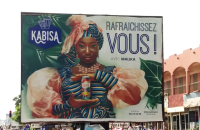 Four hundred years after the institution of slavery set off mechanisms devaluing African aesthetics, many on the continent still have a difficult relationship with African women’s hair. Granted, the natural hair movement has gathered momentum in African countries in the past five years, following earlier trends in the US and Europe. Many more young women today wear natural styles unapologetically just like Ms. Universe 2019. Yet resistance to natural hair, in particular afros and dreadlocks, persists.
23.02.2024 | by Yarri Kamara
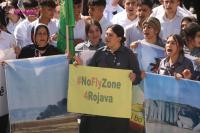 The undersigned express our solidarity with the Kurdish movement made up of children, young people, women, diverse identities and the Kurdish people in struggle for their rights to autonomy and self-determination. And through our personal and collective voice we want to let the world know what is happening in Kurdish territory right now.
08.10.2023 | by várias
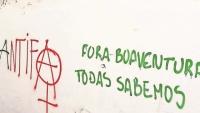 The fact that BSS behaves like a feudal lord no longer surprises us in this “global south”. The same cannot be said of a publisher like Routledge, whose act of censorship does not honor its history (a history that began in 1836 and includes the publication of thinkers and scholars such as Adorno, Einstein, Russell, Popper, Wittgenstein, Jung, Bohm, Hayek, McLuhan, Marcuse, and Sartre). The irony, or hypocrisy, is that Taylor & Francis, the owner of Routledge, even ventures (and rightfully so!) to provide advice to its authors who are victims of harassment in academia...
11.09.2023 | by João Pedro George
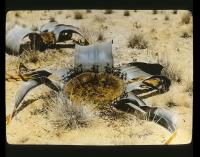 These brief notes focus mainly on possible steps towards the discussion about the decolonisation, or decolonisations, of botanical collections and practices at the University of Coimbra. They are not intended to delimit a unidirectional and hierarchical path of activities to be developed and are not a closed script for a decolonial rereading of the collections, which are a constant challenge, always presenting us with open questions and incomplete answers. My views and writings on this subject stem from a position of privilege as an academic working at the UC, which allows me the time, easier access to the collections under analysis and the freedom to appose narratives onto natural and cultural objects long disconnected from their contexts of origin; I am aware of my limitations in identifying additional perspectives and knowledges, which other voices will be able to bring to the open and ongoing debate.
01.08.2023 | by António Carmo Gouveia
 The challenge remains: how to create a forward-thinking and progressive community, in which mothers are also represented and included? The work mothers and caregiver musicians cannot be perpetually undervalued or rendered invisible. Continuing to ignore the struggles mothers/caregivers face is unjust, unsustainable and will perpetually leave out many in our field.
01.08.2023 | by Sara Serpa
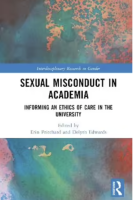 The publication of the book was decisive for our mobilization as a collective and for our decision to gather testimonial and documentary evidence that corroborate the various types of violence described in the mentioned chapter. In this sense, we note with great concern the unavailability for sale of the book.
11.07.2023 | by várias
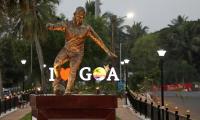 Intended to inspire young people interested in the sport of football, a bronze statue to the Portuguese footballer Cristiano Ronaldo was installed in December 2021 in the coastal town of Calangute, Goa (India). However, rather than having said desired effect, the statue received immediate backlash by local residents that staged a protest with black flags. To understand the contention over the statue, in this essay I will concisely unpack the controversy behind the statue and a history of Portuguese colonialism that its existence provokes. Arguing, although created for innocent reasons, the statue to the Portuguese footballer is a contemporary example of cultural neocolonialism and that the statue has no place in Goa, or anywhere else within India.
26.04.2023 | by Andrew Nunes
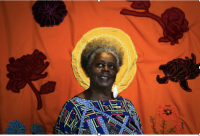 I argue that by working within the porous intersection between feminism and race, Evaristo writes back against Western phallogocentrism, under whose domain “a man’s body gives credibility to his utterance, whereas a woman’s body takes it away from hers”. Moreover, in re-constructing her own version of the Black female body, Evaristo strives to counter what Spillers describes as the processes by which “the dynamics of signification and representation […unravelled] the gendered female” through the marking of Black woman’s “flesh as a prime commodity of exchange” during slavery. This leads in Poemas to a rejection of sexuality’s lexical crisis under enslavement, or rather, a rejection of the ways in which bodily “dispossession as the loss of gender” translates into Blackness’s “anagrammatical [abuttal]” of the feminine/familial markers ‘woman’ and ‘mother’. Disavowing the ‘American Grammar’ as such allows for Evaristo’s re-vindication of Black flesh, seeing it transfigured into an embodied cipher of shared heritage, unified resistance, and communal healing – a project of re-inscription which, drawing on the theoretical idiom of Christina Sharpe, I shall call ‘wake work’. The kaleidoscopic meanings of ‘wake’ abound in Sharpe’s writing, encompassing “the keeping watch with the dead, the path of a ship, a consequence of something, […] awakening, and consciousness” – at once appealing to the historical traumas of the Middle Passage and the violent slave-plantation economy, ‘wokeness’, and projects of memorialisation.
09.12.2022 | by Isobel Jones
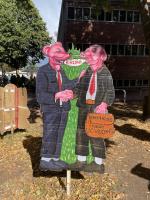 Always identified with audacity, - or, as seen in the international press, marked with “controversies” and even “scandals” - the event is among the largest and most important in the art world. The fifteenth edition that was recently carried out was not exempt from a “scandal”: the unanimity of the German press in its judgment of anti-Semitism.
02.11.2022 | by Cheong Kin Man
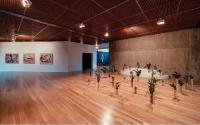 This exhibition presents around 60 works by 21 artists whose family origins lie in the former colonies in Africa. Born and raised in a post-colonial context, they are artists whose works have become unavoidable in European contemporary art, proposing a reflection on their heritage, their memories and their identities.
01.11.2022 | by Marta Lança
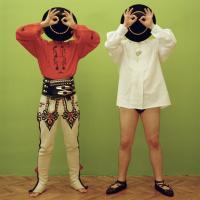 The exhibition, which aims to give voice to a young generation of photographers in Poland, also includes the work of Irena Kalicka, a young artist who is critical of her country’s tendency to turn to the extreme right. I had the opportunity to present a photograph of her in the magazine “Fantasia Macau” last year.
21.10.2022 | by Cheong Kin Man
 Angola is a nation still recovering from years of war and internal conflict, but photographer Kim Praise has his heart set on capturing the nation’s beauty, and the ways in which it’s evolving for the better. He tells writer Ify Obi about his favorite things about his home, and why he’s determined to paint the country—and its people—in a new light.
12.10.2022 | by Ify Obi
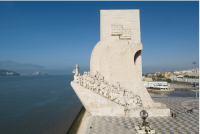 I believe that through art we can find a strong path of remembrance. Artists are able to communicate across temporalities and spaces, which traditional historiographical treatment could hardly accomplish. Artists who work with individual and personal history build empathy through works compared to academic research. Colonial monuments and street names left un-vandalized are not neutral spaces. As static as stone and tarmac may seem, memory is a process, not something carved and eternally preserved. New practices of memory preservation, from manifold perspectives, allow for addressing misconceptions and novel understandings of where certain contemporary situations emerge. In the absence of these practices, our imaginary becomes an accomplice to denials of violent that can always be repeated in unexpected ways.
27.08.2022 | by Marta Lança
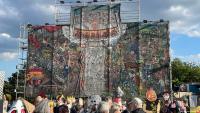 As agitprop, People’s Justice isn’t complex. On the right are the simple citizens, villagers and workers: victims of the regime. On the left are the accused perpetrators and their international accomplices. Representatives of foreign intelligence services – the Australian ASIO, MI5, the CIA – are depicted as dogs, pigs, skeletons and rats. There is even a figure labelled ‘007’. An armed column marches over a pile of skulls, a mass grave. Among the perpetrators is a pig-faced soldier wearing a Star of David and a helmet with ‘Mossad’ written on it. In the background stands a man with sidelocks, a crooked nose, bloodshot eyes and fangs for teeth. He is dressed in a suit, chewing on a cigar and wearing a hat marked ‘SS’: an Orthodox Jew, represented as a rich banker, on trial for war crimes – in Germany, in 2022.
10.08.2022 | by Eyal Weizman
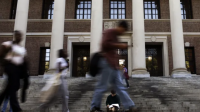 Students’ activism and social demand for more laws for people in need are some ways of changing the issue but are they enough? Can we fight against social stratification? This situation is an old one and it is deep-seated in society. People in power that belong to the upper classes want to remain that way. Is it possible the existence of an equal world with equal people, access, and values?
17.02.2022 | by Arimilde Soares
 With this MEMOIRS project Newsletter, Nº 147, we conclude a journey started on May 5, 2018. To the
group of researchers of the project, to the dozens of external collaborators, to all the artists who
contributed with their images, to the producers and designers, the deep gratitude of the editors, who
are certain of two things: to have contributed to the sharing of a common good, knowledge, and to
have done so in the spirit of public service
With this MEMOIRS project Newsletter, Nº 147, we conclude a journey started on May 5, 2018. To the
group of researchers of the project, to the dozens of external collaborators, to all the artists who
contributed with their images, to the producers and designers, the deep gratitude of the editors, who
are certain of two things: to have contributed to the sharing of a common good, knowledge, and to
have done so in the spirit of public service
17.01.2022 | by António Pinto Ribeiro
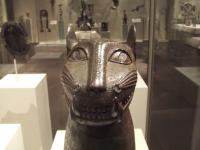 The past five years have seen a flurry of activity around issues of restitution of African material heritage, resulting in new reports, new books and even, new returns. Along with this sudden surge in activity there has been an escalation in debate around these questions, where positions once thought to be entrenched, racist, conservative, and considered mainstream, seem to have shifted dramatically. In the frenzy, it can begin to feel as if things are changing and that society is progressing. But we’d do well to pause for deeper dives and more systematic remembering of what has come before.
28.12.2021 | by
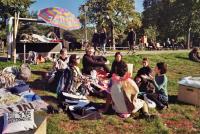 The following dialogue was conducted after the very first action. “Common Ground” was a reading session in which organizers and participants from different cultural backgrounds and with different native languages faced the problem of translation and the complicated, thorny question of language hierarchy in academia (and thus, a hierarchy of ideas). In this dialogue, now reproduced in the written form of an interview, Sala had fulfilled her genuine wish to break the “collective isolation” that many people - including artists - have been facing until now.
09.12.2021 | by Cheong Kin Man