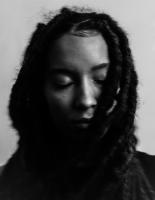
 At its heart, MIXED is an exploration of racial and cultural identity. MIXED deals specifically with people that have mixed heritage, delving into the experiences of each subject that also echo his own. The series addresses the existential feeling of not fully belonging, while examining the cost of assimilation within society. The conversations focus especially on the contradiction of fitting in everywhere but nowhere at the same time and the resulting shoot is a collaboration that encompasses the themes considered.
Stages
02.11.2022 | by Theo Gould
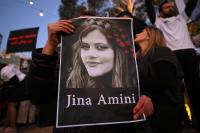 Shortly after Amini’s violent death on 16 September, protests broke out and spread from the Kurdish parts of Iran to the whole country and the world. Demonstrators chanted the Kurdish slogan “jin, jiyan, azadî” – “woman, life, freedom”. But in news reports, particularly Western ones, Jîna Amini’s Kurdish identity has been erased – she is described as an Iranian woman and her ‘official’ Persian name ‘Mahsa’ – which for her family and friends existed only on state-documents –is the one in headlines. Calls to “say her name” echo in real life and across social media but unwittingly obscure Jîna’s real name and, in doing so, her Kurdish identity.
Games Without Borders
18.10.2022 | by Meral Çiçek
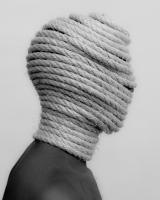 My work has always been focused round connection. I’ve always wanted to tell stories that even though you know the audience and the subject might be different I would want the audience to look at the photo, the subjects, and each detail and for them to be able to see something similar.
Most people that look at my most recent project “MIXED” and probably don’t necessarily think of themselves as mixed, however if we really look back at history and ethnicity it’s clear that we are all mixed, we just haven’t identified it . We all came from Africa and our genetic disposition is remarkably similar. The only differences we notice are as a result of our ancestors colonising different parts of our planet. Effectively we’re all mixed as racial purity is a complete myth.
My work has always been focused round connection. I’ve always wanted to tell stories that even though you know the audience and the subject might be different I would want the audience to look at the photo, the subjects, and each detail and for them to be able to see something similar.
Most people that look at my most recent project “MIXED” and probably don’t necessarily think of themselves as mixed, however if we really look back at history and ethnicity it’s clear that we are all mixed, we just haven’t identified it . We all came from Africa and our genetic disposition is remarkably similar. The only differences we notice are as a result of our ancestors colonising different parts of our planet. Effectively we’re all mixed as racial purity is a complete myth.
Face to face
28.02.2022 | by Alícia Gaspar
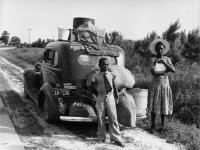 And so it was in these places of refuge that Black Lives Matter arose, a largely Northern- and Western-born protest movement against persistent racial discrimination in many forms. It is organic and leaderless like the Great Migration itself, bearing witness to attacks on African-Americans in the unfinished quest for equality. The natural next step in this journey has turned out to be not simply moving to another state or geographic region but moving fully into the mainstream of American life, to be seen in one’s full humanity, to be able to breathe free wherever one lives in America.
Games Without Borders
17.02.2021 | by Isabel Wilkerson
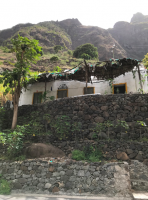 The present photo-essay is the result of recent fieldwork. On the islands, the inhabitants had to harness available resources (e.g., rain, soil, mountains and oceans) and follow a frugal but ingenious diet. Collectively, they triumphed over natural forces, western colonialism and deterministic forecasts.
To read
13.09.2020 | by Kaian Lam
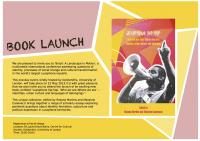 “This fascinating book looks at hip hop in the Lusophone world. Its authors explore the various aspects of hip hop culture - break dance, graffiti, rap music, and social movements based on this street culture. They scrutinise local cases and examine the multiple links between hip hop on both sides of the Atlantic, such as the new global codes that have developed among Portuguese-speaking young people.”
Stages
02.05.2013 | by Rosana Martins
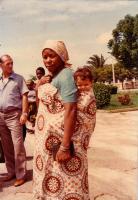 Why am I not black. Or rather, how did I end up a Mozambican?
These questions about identity are normal. They come up more often when I’m not in Mozambique due to (I assume) lack of historical knowledge. But what does a Mozambican look like? Mozambique, as a nation, didn’t exist until 1975. It was then it was born, a carrier of other nations within its borders, of ethnicities as varied as Shangana, Makonde, descendants from Swahili and Arabs from the North, descendants from Goan, Pakistani, Portuguese, Ronga and so on. With that new country came a new nationality — Mozambican.
Why am I not black. Or rather, how did I end up a Mozambican?
These questions about identity are normal. They come up more often when I’m not in Mozambique due to (I assume) lack of historical knowledge. But what does a Mozambican look like? Mozambique, as a nation, didn’t exist until 1975. It was then it was born, a carrier of other nations within its borders, of ethnicities as varied as Shangana, Makonde, descendants from Swahili and Arabs from the North, descendants from Goan, Pakistani, Portuguese, Ronga and so on. With that new country came a new nationality — Mozambican.
Face to face
27.04.2011 | by Rui Tenreiro
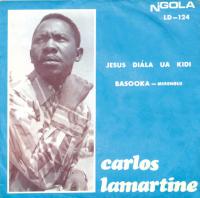 It’s 1943 and Benguela is thriving. As the famous railway heads inland, the town readies itself for a make-over: there is a modern development plan afoot. Progress is the watchword. In one of its streets, an important event is about to occur: Dona Ludovina (a singer of some style, they say), the wife of Sebastião José da Costa, an employee at the Post Office and a former journalist, is about to give birth to a child she will call Carlos Lamartine. Benguela waits, with open arms, to welcome a great son, one who will be a major figure in Angolan music and the author of timeless melodies.
Stages
18.02.2011 | by Mário Rui Silva
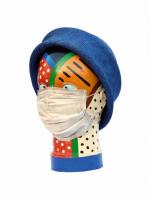 To interpret what it means to be a traveller – in present day terms – is a multifaceted exercise, put in the spotlight even further by the geography and culture that define the point of departure and that of arrival. Human “latitude” is what you find between the distance travelled from the beginning to the end. For many, it’s an agent provocateur that creates a field of artistic and intellectual experimentation where the force of innocuous space takes us to all sorts of exchanges and the construction of new concepts.
Face to face
02.01.2011 | by Jorge Rocha
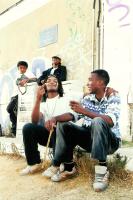 I set out to understand the modes of sociability of the Red Eyes Gang, a group of youths from Arrentela, Seixal, on the outskirts of Lisbon. The majority of them are children of African immigrants from countries that were formerly Portuguese colonies, and live in socioeconomic conditions well below those of the Portuguese. All were born in Portugal or arrived very young, never knowing their parents' countries of origin. However, they appropriate some of their ethnic and cultural heritages because of the stigmatization and racism to which they are subjected, reworking their condition of being poor and black. They do not mechanically reproduce the way of life and ethnic influences of their families, but reinvent them with imagination, thus producing positive statements about themselves.
To read
21.10.2010 | by Otávio Raposo