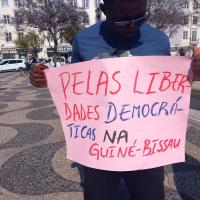
 Birthplace of one of the greatest Pan-Africanist thinkers of all time, Amílcar Cabral, Guinea-Bissau occupies our collective memory, just like Toussaint’s Haiti, Dessalines, Boukman and Cécile Fatiman, a place reserved for the great luminaries of the history of Pan-African revolutions and struggles. Therefore, we can not be indifferent to the extreme violence that the people of this nation, forged in the struggle, has been facing in the hands of a State ruled by scammers, kleptocrats and murderers, whose Berlin-style agenda has been nothing but the destruction of that ‘broad road of hope’ built by the greatest collective endeavour this people has ever undertaken: the struggle for independence.
 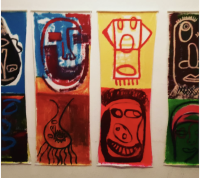 The Black body is one of the boring, limiting terms that abound in decolonial discourse. The fact that it is an unknown or almost unknown term in Guinea-Bissau (I’ve no idea if I need statistics to say this), makes me wonder: how do you decolonize Africa without Africans being involved?
  If images are powerful for identifying and revolutionising through the multiple interpretations they introduce into human feelings, then words identify through questioning, as they are connected to an idea of language as domination and authority – in other words, only those with social and political legitimacy write and speak.
 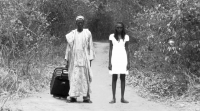 ECAScreening5: The battle mentioned in the title of the movie is that between Good and Evil, symbolizing music and silence, Africa and Europe, told through the story of a Guinean musician who, caught in the convulsions of the colonial war, left for Portugal and returns home to the wedding of his daughter with a musician, ending up disturbing the ancestral equilibrium of mandinga mysticism.
 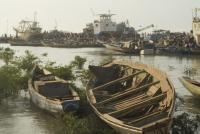 In July 2009, the campaign for the second round of presidential elections in Guinea-Bissau had been on the streets for a week. But the leading players are not only Kumba Ialá and Malam Bacai Sanhá, but also the people, who reject violence and fear the power of the military and narcotraffickers.


Guinea-Bissau
Articles tagged with Guinea-Bissau
Tag Archive
- África do Sul
- Alberto Carneiro
- Amadou Diallo
- arabes
- archive
- border
- c
- cannibal museology
- Carlota de Barros
- circulação de saberes
- Cleo Diára
- Coleira
- collect the work of black artists
- colonialism
- comunidade
- decolonial
- desert
- Diálogos com Ruy Duarte de Carvalho
- diáspora caboverdiana
- diversidade
- Earth
- environmental sustainability
- escravo
- Festa do Avante
- Festival Alkantara
- fotografia
- Frantz Fanon
- game
- global relations
- gulbenkian
- Hélio Oiticica
- herero
- hospitality archaeologies
- immigrant
- indentity
- Índios
- Jeane terra
- João de Deus Lopes da Silva
- Jornalism
- justiça
- kuduro
- landscape
- Lólo Arziki
- man
- mexican
- migratory politics
- Moçâmedes
- multiculturalism
- nationalists
- Negro. mulheres
- Neo-Colonization
- Nigeria
- opinion
- Oppressions
- paisagem
- pandemic
- pánu di téra ; Cape Verde; textiles; fashion design; globalization; identity
- paris conference
- Paulo Kapela
- photographic heritage
- photography
- pintura
- Plant Revolution!
- plantation
- portuguese
- progressive academia
- pscianálise
- raça
- Rachel Malaika
- Raoul Peck
- René Tavares
- riots
- Rita GT
- Roberto Conduru
- Royal Museum of Central Africa
- Saara
- Salvador da Bahía
- Sené Absa
- sequence
- Sérgio Afonso
- settlers
- south south
- Spielart festival
- Statue
- Sudan
- surname
- Tamara Dawit
- Tarnac
- Terceira Metade
- The Right to Look
- therapeutic practices
- trauma
- uk garage
- USA
- Vasco da Gama
- victor gama
- Walter Salles
- yanomami
- Yonamine
- “Sexual Misconduct in Academia”