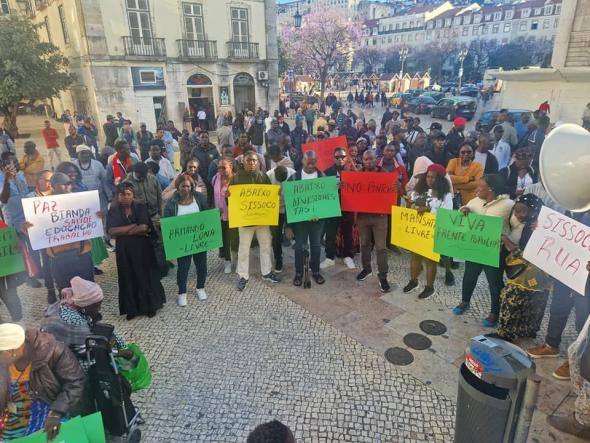
In the name of fraternity and historical, active and combative solidarity
How should the African diaspora respond to the fight of the brave people of Guinea-Bissau against the State violence?
In 2025, while Cape Verde, São Tomé and Príncipe, Angola and Mozambique celebrated the 50th anniversary of their independences, Guinea-Bissau completed 52 years of existence as a free and independent state.
Land of all fights, Guinea-Bissau was the first African country colonized by Portugal to unilaterally terminate the colonial yoke, on September 1973, thanks to a diplomacy that mobilized and identified all the people as “an anonymous combatant for the cause of the United Nations”, but mostly thanks to a strategic and military supremacy that unequivocally defeated the colonial Portuguese army.
Between the African countries that fought against colonialism, Guinea-Bissau distinguishes itself as one of the rare cases where independence was achieved not through negotiation, but by armed force. And we can not forget that the cost of this fight was paid with countless lives. This is the significance of the slogan “the struggle continues”.
Birthplace of one of the greatest Pan-Africanist thinkers of all time, Amílcar Cabral, Guinea-Bissau occupies our collective memory, just like Toussaint’s Haiti, Dessalines, Boukman and Cécile Fatiman, a place reserved for the great luminaries of the history of Pan-African revolutions and struggles.
Therefore, we can not be indifferent to the extreme violence that the people of this nation, forged in the struggle, has been facing in the hands of a State ruled by scammers, kleptocrats and murderers, whose Berlin-style agenda has been nothing but the destruction of that ‘broad road of hope’ built by the greatest collective endeavour this people has ever undertaken: the struggle for independence.
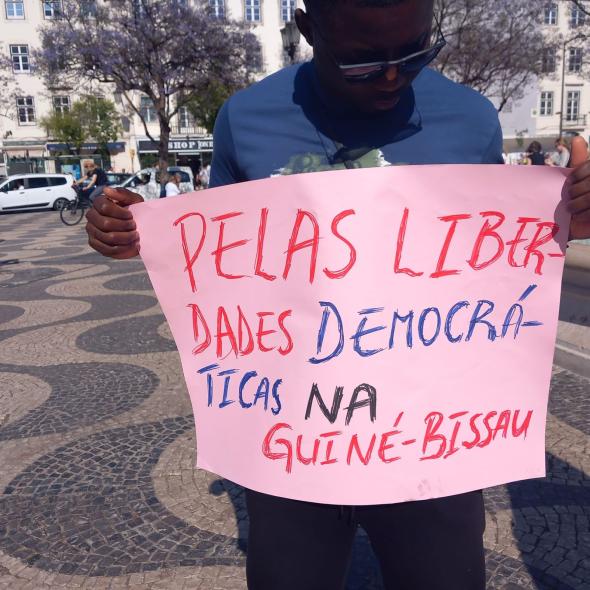
The brutal murder of Vigário Balanta was only one episode of a long history of tragedies that continue to be written by the State with the blood of Guinean people. Faithful to their tradition of fighting, many individuals and organisations have persistently reported the attacks by that State against its own people.
The report by the Guinean Human Rights League (2023–2025) confirms the severity of this situation, reporting, in statistical terms, hundreds of cases of arbitrary detention and allegations of torture — many of them which took place on government facilities, specifically at the Ministry of the Interior — as well as dozens of attacks on freedom of the press and oppression of peaceful manifestations. It is more than clear that the dignity of men and women from Guinea-Bissau, from all ages, have been violated by a group that has been threatening the achievements of the fight for independence and the principles of Pan-Africanism.
The report also complaints about political persecution, police repression and a widespread climate of impunity, including mass arrests and dictatorial restrictions on public space. The beating and murder of people who stand up to denounce this system have become part of its modus operandi. “Think for yourself and act to transform”, the valuable lessons left by Cabral seem to have become a crime against the state in the Republic of the Black Star.
However, Umaro Sissoco Embaló, one of the faces of this necropolitical system, continues to be received at the highest level in Brussels, as if he were the worthy representative of a people he has betrayed — see the so-called “courtesy reunion” with António Costa, at the end of March. This meeting was strongly condemned, in an open letter by the comrades at the Forum for Civil Society Organisations (Espaço de Concertação das Organizações da Sociedade Civil), the Popular Front, and Firkidja di Pubis.
And let’s not forget that, in 2021, the State of Cape Verde, chaired by President Jorge Carlos Fonseca, had the audacity to award the 1st Degree Medal of the Order of Amílcar Cabral - the most prestigious award of the country - to Sissoco Embaló. This decision not only shamed Cape Verdeans who are mindful of their history, but also failed to honour the pact of brotherhood that binds us to Guinea-Bissau, whilst violating the principles of freedom and solidarity among peoples enshrined in the Cape Verdean Constitution.
On the same line, an embarrassing — if not deathly — silence has fallen over several African countries in the wake of recent violent episodes, in particular the murder of Vigário Balanta.
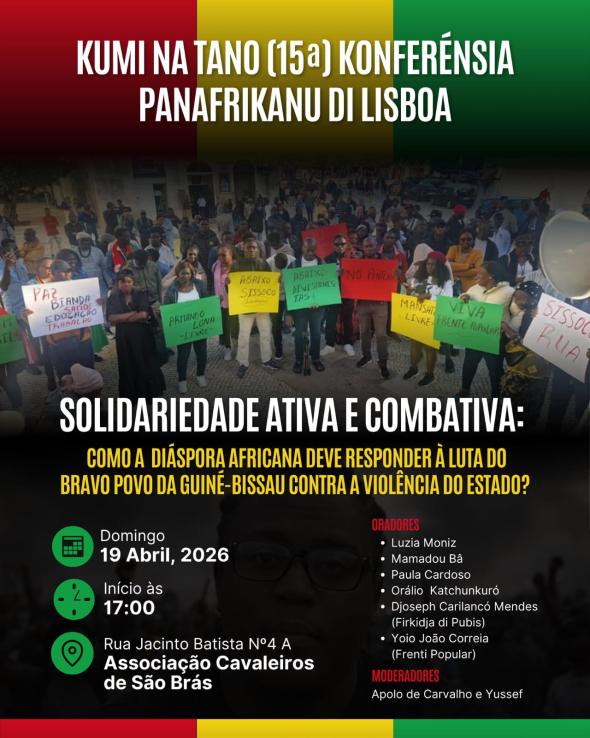
In the face of the current situation, the compromise with African unity calls directly upon all the peoples of the continent and the diaspora to build a united front of solidarity with the brotherly people of Guinea-Bissau. If, in the past, this Pan-African solidarity was decisive in achieving victories against colonialism, fifty years after the independence, we must address the new question that has arisen: how can we respond, in a concrete, active and militant manner, to the Guinean people’s fight against the State violence?
It is in this sense that the 15th the Pan-African Conference of Lisbon is organized, an open space to all people who, in solidarity with the brothers and sister from Guinea-Bissau, seek to reflect and build ways of active participation in their fight, presenting Pan-African answers in the name of equality, freedom and justice.
“Every time a man has contributed to the victory of the dignity of the spirit, every time a man has said no to an attempt to subjugate his fellows, I have felt solidarity with his act.” (Fanon, 2008: 187)