Nova Galeria Buala de Abraham Oghobase

Päätön (Acéfalo) de Abraham Oghobase

Abraham Ogobhase indaga o sentido da existência humana, expondo através da fotografia e performance uma ampla gama de emoções (a solidão, o medo, a ansiedade, o isolamento, a liberdade,…) e usando o seu próprio corpo como objeto.

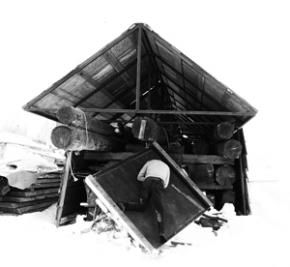
Em Päätön (tradução do finlandês: acéfalo), uma paisagem invernal, gélida, despovoada de outros seres humanos é o cenário escolhido por Abraham para explorar o corpo. Aqui, numa coreografia onde o corpo e outros objetos são subsumidos no espaço, o sujeito (este corpo acéfalo) é, ao mesmo tempo, ausente (invisível) e presente, assumindo uma forma de alien na paisagem.

ver +

05.06.2013 | por franciscabagulho | Abraham Ogobhase, arte contemporânea, corpo

open, creative, inclusive and collaborative chance to discuss the issues facing African studies


unECAS 2013 is an Unconference taking place on Sunday, June 30th, one day after the closing of the 5th European Conference of African Studies (June, 27-29), in the same venue (ISCTE-IUL).

unECAS 2013 is an open, creative, inclusive and collaborative chance to discuss the issues facing African studies, its trends and visions, and to work together to come up with new theoretical and practical approaches.UnECAS is a testing ground for connecting students and researchers in an informal scientific get together.

All are invited to this UnConference where the organizing principle is that of bottom-up self-management, free of academic hierarchies. Join us and share your experiences and thoughts.

We, ECAS 2013 organizers, feel that the UnConference concept is most adequate to make a final balance of the 5th ECAS, and to look together at the future(s) of African Studies.

The steps are simple:
1. Check the site of unECAS 2013: http://cea.iscte.pt/unecas2013/

2. Register at Eventbritehttp://unecas2013.eventbrite.com/

3. Post Session Ideas at Triciderhttp://tricider.com/brainstorming/v3nQ

4. Follow updates at Twitter (if you wish): https://twitter.com/unECAS2013

If you have any questions that the site’s FAQs don’t answer you, please feel free to contact us at: unecas2013@gmail.com


05.06.2013 | por martalanca | ECAS

Casa de Lava - Caderno

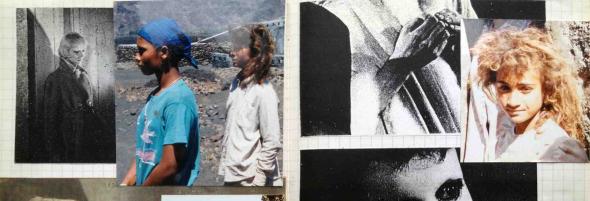
Durante o processo de produção do filme ‘Casa de Lava’ (1994), Pedro Costa colecionou num caderno o que viu, o que leu, as suas ideias. Em vez de um argumento tradicional, este caderno reúne imagens, cartas, recortes de jornais, citações, postais, pinturas…. que guiaram o realizador durante as filmagens em Cabo Verde, e que continuou (e foi concluído) após o seu regresso a Lisboa. Este caderno tornou-se um objecto autónomo do filme, mostrando a linguagem visual de Pedro Costa.

A edição de ‘Casa de Lava - Caderno’ é uma reprodução facsimilada do caderno original de Pedro Costa e inclui em anexo uma conversa entre o realizador e Nuno Crespo, e um texto de Philippe Azoury (em português, inglês e francês).

Pedro Costa (Lisboa,1959)

Abandona os estudos em História para frequentar as aulas do poeta e realizador António Reis na Escola de Cinema de Lisboa. O seu primeiro filme ‘O Sangue’ estreou mundialmente na Mostra Cinematografica di Venezia em 1989. ‘Casa de Lava’, a sua segunda longa metragem, filmada na Ilha do Fogo em Cabo Verde, foi apresentada em Cannes - ‘Un Certain Regard’, em 1994. Os seus filmes seguintes incluem ‘Ossos’, ‘No Quarto de Vanda’ e ‘Onde jaz o teu sorriso?’, sobre o trabalho de Danièle Huillet e Jean-Marie Straub. Recentemente realizou ‘Sweet Exorcist’, um segmento da produção colectiva ‘Centro Histórico’, com Manoel de Oliveira, Aki Kaurismaki e Victor Erice. O seu trabalho foi apresentado em várias galerias e museus em todo o mundo. É um dos artistas convidados do Pavilhão de Cuba na Bienal de Veneza 2013.

Mais sobre o artista: www.pedro-costa.net


Casa de Lava - Caderno
de Pedro Costa
Capa dura / 14.6 x 20.9 cm / 144 p.
Inclui uma conversa entre Pedro Costa e Nuno Crespo e um texto de Philippe Azoury (em português, inglês e francês).

Preço Pré-venda: 25 Eur
Preço de capa: 30 Eur
Disponível em Julho 2013

Mais informações:
www.pierrevonkleist.com

04.06.2013 | por martalanca | casa de lava, Pedro Costa

Welcome to Nollywood

As Bollywood celebrates 100 years, we look at how the Nigerian film industry is stepping up to challenge its dominance.

The world is celebrating one hundred years of Bollywood, the triumph of an industry that continues to challenge the status quo of western storytelling. 
But Bollywood might have to watch its back, as the Nigerian film industry, Nollywood, steps up to challenge the eastern industry for the title of most productive film industry.

The fast-paced, high-turnover industry of Nollywood is revolutionising the movie-making model, and all without foreign aid or government subsidies.

Nigerians are telling their own stories and making movies their way. So, what has this meant for the Nigerian people?

Franco Sacchi, an Italian filmmaker whose fascination with the industry led to him making his award-winning documentary, Welcome to Nollywood, says:

“These filmmakers are incredibly courageous, and at some point in time, in the early, mid-90s they really felt they had no other options, [but] to just grab the available tools and start telling their stories.”

Sacchi explains how the digital revolution dropped the entry level for filmmaking, making it accessible to many storytellers who could film and edit their movies with affordable technologies. The low level of investment meant that the filmmakers also had space to experiment, explore and make mistakes.

Our second guest, Yewande Sadiku was an executive producer on the film Half of a Yellow Sun, adapted from Chimamande Ngozi Adichie’s award-winning book of the same name. Sadiku is an investment banker who used her skills to finance the bulk of the film locally.

“Because of my day job I understood what investors would like to see, I mean the word investment means you put money in something and you expect to get something back. The challenge with many Nollywood productions is distribution. It is extremely difficult to explain to anyone, to articulate how the returns will come back to them.”

A part of making the investment viable involved bringing in British actors Thandie Newton and Chiwetel Ejiofor - their star power made the film more appealing to an international audience.

Born in Nigeria, Biyi Bandele started working on his first novel in his early teens. He has been internationally hailed as an important literary figure and has written several plays as well as novels. Bandele decided he wanted to be involved in turning Half of a Yellow Sun into a movie after reading the book.

“The moment I read [Half of a Yellow Sun], about six years ago, I just fell in love with it. And I was paranoid that if it was done by anyone coming from the outside they would make a kind of movie about Africa, and I watch them and I want to hide under the seats. I wanted a movie that depicted Africans as human beings, and not just statistics from NGOs.”

In this episode of South2North, Redi Tlhabi asks about the future of Nollywood, and what to expect from the new generation of movie makers.

Sadiku says, “I think the future of Nollywood is very bright …. It has demonstrated what is possible …. If you write with a blunt pencil, and you write with a sharp pencil, your handwriting is exactly the same but it looks very different. That’s what Nollywood needs to move to - the next level.”

WATCH ON ALJAZEERA
 

01.06.2013 | por martalanca | Nollywood

Mia Couto na Roda Viva - Brasil

vale a pena ouvir esta entrevista colectiva do Prémio Camões no programa brasileiro Roda Viva

01.06.2013 | por martalanca | Mia Couta