 JUAN OBARRIO | JOHNS HOPKINS UNIVERSITY
If the Holocaust can be considered as the universal equivalent to compare all processes of post-genocide / post-conflict, collective memory, and transitional justice, then the regional example that towers above the aforementioned processes in sub-Saharan Africa is the South African Truth and Reconciliation Commission, its mandate, its procedures, and its report. Across the border, in Mozambique, a related yet paradoxically different process has taken place in the last 15 years after the connected modes of democratic transition and transitional justice accomplished most of their turns and returns.
Besides national union, what is lacking today in Mozambique is—as some local organic intellectuals put it—“a process of reconciliation between the people and the state.”1 Emerging from a bloody civil war and eighteen years of an Afro-socialist experiment, the Mozambican state began a deep process of legal and administrative reform in the late 1990s. This extensive post-war legal reform, which to a large extent was engineered and funded by foreign donors, is aimed at developing the internationally mandated goals of decentralization, democratization, and rule of law. In this process, an ambiguous legal recognition crucial to the politics of state decentralization has been accorded by the state to the realm of the “customary” and its authorities. Through policies such as the recognition of chiefs and the legal redefinition of “custom” in terms of “community,” the state implicitly engages with the past and its legacies of violence. Indeed, this legal engineering emerges as a revision of a most conflictive political history and functions as a politics of memory whereby the state attempts, through new legislation and forms of legal inscription, to rewrite colonial and post-colonial history, harnessing it to the project of a democratic future. In the absence of large state-sponsored theaters of truth and reconciliation, this juridico-political process and its quotidian disseminated effects can be seen as an attempt to develop an implicit policy of national understanding. This process also represents a politics of mourning. Yet this veritable process of what could be defined as “reconciliation without truth,” begs the question of an impossible mourning. If mourning takes place within the frame of certain time limits and with the certainty of the presence of the (dead) body, then can some African nations such as Mozambique, as well as many Latin American nations also engaged in unending mourning, be defined as pathological, “melancholic states”?

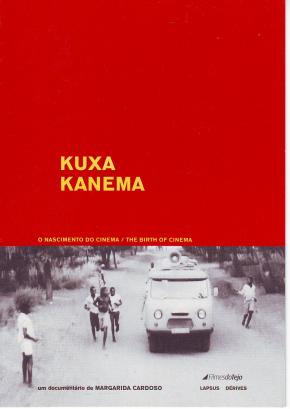 «A primeira acção cultural do governo Moçambicano logo após a independência, em 1975, foi a criação do Instituto Nacional de Cinema (INC). O novo presidente, Samora Machel, tinha especial consciência do poder da imagem e de como utilizá-la para construir uma nova nação socialista. As unidades de Cinema Móvel vão mostrar por todo o país a mais popular produção do INC, o jornal cinematográfico Kuxa Kanema.
  Pela primeira vez em Angola, junta-se reggae com hip hop, dois estilos musicais oriundos da mesma família, filhos do jazz e do blues que por sua vez tem origem nos ritmos africanos, levado para as Américas através dos escravos. Neste evento, o som ficará a cargo do SELECTA AYALA, fundador do colectivo de selectas, dj´s e mc´s RIDDIM CULTURE SOUND e do DJ SAMURAI, fundador da label independente MADTAPES. Terá ínicio às 22:30, e o preço serão apenas 1000 kwz. Tudo a postos para mais uma noite cheia de boas vibrações e energias positivas. Aparece, passa a palavra, reencaminha o mail e traz um amigo. Tamos Juntos!