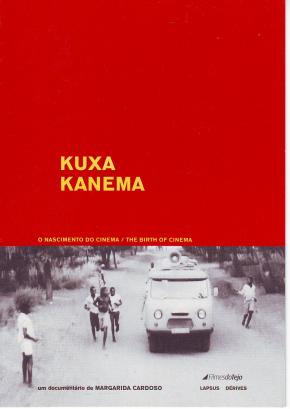
KUXA KANEMA: O Nascimento do Cinema

um documentário de Margarida Cardoso
TEATRO CAMÔES 
22 de Junho às 21h Entrada Livre
CONVERSA sobre o filme 
a anteceder a projecção com a realizadora Margarida Cardoso; a Directora da Cinemateca Portuguesa-Museu do Cinema Maria João Seixas e o Sub-Director da Cinemateca Portuguesa-Museu do Cinema José Manuel Costa
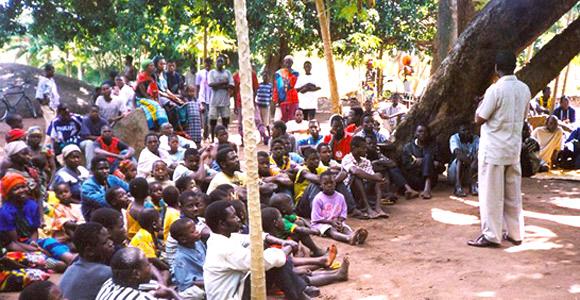
«A primeira acção cultural do governo Moçambicano logo após a independência, em 1975, foi a criação do Instituto Nacional de Cinema (INC). O novo presidente, Samora Machel, tinha especial consciência do poder da imagem e de como utilizá-la para construir uma nova nação socialista. As unidades de Cinema Móvel vão mostrar por todo o país a mais popular produção do INC, o jornal cinematográfico Kuxa Kanema. 
Kuxa Kanema quer dizer o nascimento do cinema e o seu objectivo era: filmar a imagem do povo e devolvê-la ao povo. Mas hoje a República Popular de Moçambique passou a ser, simplesmente, a República de Moçambique. Da grande empresa que foi o INC não sobra quase nada. Destruído por um fogo em 1991, só restam do edifício salas e corredores abandonados onde alguns funcionários esperam pacientemente a reforma. Num anexo apodrecem, esquecidas, as imagens que são o único testemunho dos onze primeiros anos de independência, os anos da revolução socialista.
É através destas imagens e das palavras das pessoas que as filmaram que seguimos o percurso de um ideal de país, que se desmorona, pouco a pouco, com o ideal de “um cinema para o povo” e com os sonhos das pessoas que um dia acreditaram que Moçambique seria um país diferente.»


FICHA TÉCNICA 

Realização Margarida Cardoso · Imagem Lisa Hagstrand · Montagem Isabelle Rathery e Timothy Miller

Produção Filmes do Tejo [Maria João Mayer e François d’Artemare] · Lapsus [Esther Hoffenberg] Derives [Jean-Pierre e Luc Dardenne] · Coordenação de ProduçãoMagda FerroEmmanuelle Koenig e Véronique Marit 

Mistura Patrick Sigwalt · Camera Adicional Karl Sousa [Moçambique] Dib Lutfi [Brasil] Miguel Sales [Portugal]


20.06.2011 | par martalanca | kuxakanema

Mozambique: Reconciliation without "Truth"

JUAN OBARRIO | JOHNS HOPKINS UNIVERSITY

If the Holocaust can be considered as the universal equivalent to compare all processes of post-genocide / post-conflict, collective memory, and transitional justice, then the regional example that towers above the aforementioned processes in sub-Saharan Africa is the South African Truth and Reconciliation Commission, its mandate, its procedures, and its report. Across the border, in Mozambique, a related yet paradoxically different process has taken place in the last 15 years after the connected modes of democratic transition and transitional justice accomplished most of their turns and returns.

Besides national union, what is lacking today in Mozambique is—as some local organic intellectuals put it—“a process of reconciliation between the people and the state.”1 Emerging from a bloody civil war and eighteen years of an Afro-socialist experiment, the Mozambican state began a deep process of legal and administrative reform in the late 1990s. This extensive post-war legal reform, which to a large extent was engineered and funded by foreign donors, is aimed at developing the internationally mandated goals of decentralization, democratization, and rule of law. In this process, an ambiguous legal recognition crucial to the politics of state decentralization has been accorded by the state to the realm of the “customary” and its authorities. Through policies such as the recognition of chiefs and the legal redefinition of “custom” in terms of “community,” the state implicitly engages with the past and its legacies of violence. Indeed, this legal engineering emerges as a revision of a most conflictive political history and functions as a politics of memory whereby the state attempts, through new legislation and forms of legal inscription, to rewrite colonial and post-colonial history, harnessing it to the project of a democratic future. In the absence of large state-sponsored theaters of truth and reconciliation, this juridico-political process and its quotidian disseminated effects can be seen as an attempt to develop an implicit policy of national understanding. This process also represents a politics of mourning. Yet this veritable process of what could be defined as “reconciliation without truth,” begs the question of an impossible mourning. If mourning takes place within the frame of certain time limits and with the certainty of the presence of the (dead) body, then can some African nations such as Mozambique, as well as many Latin American nations also engaged in unending mourning, be defined as pathological, “melancholic states”?
Continuez à lire "Mozambique: Reconciliation without "Truth""

19.06.2011 | par martalanca | mozambique

Achille Mbembe: "Donors have a simple notion of development"

SEPTEMBER 2009 -

“Relationships between Western cultural funding agencies and local artists and recipients have never been so bad. Instead of creating art, many artists in the Continent are forced to spend most of their time, energy and intelligence filling useless bureaucratic forms, begging, desperately trying to respond to ever-changing fads and policies when they are not checking the mood of ever-touchy ‘cultural attachés’ of Western consulates or agencies from whom they hope to get some support. This is a huge waste.”

Achille Mbembe

“We can keep dressing up the unlimited power of the donors and their money and the material poverty of the recipients in the fancy language of ‘partnership’, ‘empowerment’ or even ‘friendship’. All these words won’t mask the brutality of the encounter between those who have money but no good ideas and those who have some good ideas but no money. South Africa has the means to develop a powerful cultural policy. But the country profoundly lacks imagination. It could fund by itself a major Biennale in the global South.”

“Johannesburg could become a cultural and artistic Mecca. But the ruling party, the African National Congress, confuses ‘arts and culture’ with ‘heritage and folklore’. It is still trapped within a racial mindset to the point where the politics of race (who is black and who is not) overshadows any intrinsic value given to aesthetics as such. For South Africa to fulfill its potential, it needs to become an ‘Afropolitan’ nation in which white South African artists are presumed to be as ‘African’ as black South African artists.”

“Most Western donor agencies come to Africa with a simplistic idea of what ‘development’ is all about. They consider Africa to be a zone of emergency, a fertile ground for humanitarian interventions. The future is not part of their theory of Africa when such a theory exists. Africa is the land of never-ending present and instant, where today and now matter more than tomorrow, let alone the distant future. The function of art is to subsume and transcend the instant; to open horizons for the not-yet. Such is too, at least to me, the task of cultural criticism. In circumstances where millions of people indeed struggle to make it from today to tomorrow, the work of culture is to pave the way for a certain practice of the imagination without which people have no name and no voice. This struggle to write one’s name and to inscribe one’s voice in a structure of time that is opened to the future is a profoundly human struggle.”

Vivian Paulissen in POWER OF CULTURE

19.06.2011 | par martalanca | ACHILLE MBEMBE

REGGAE MEETS HIP HOP, ELINGA TEATRO a 29 de JUNHO de 2011

Pela primeira vez em Angola, junta-se reggae com hip hop, dois estilos musicais oriundos da mesma família, filhos do jazz e do blues que por sua vez tem origem nos ritmos africanos, levado para as Américas através dos escravos. Neste evento, o som ficará a cargo do SELECTA AYALA, fundador do colectivo de selectas, dj´s e mc´s RIDDIM CULTURE SOUND e do DJ SAMURAI, fundador da label independente MADTAPES. Terá ínicio às 22:30, e o preço serão apenas 1000 kwz. Tudo a postos para mais uma noite cheia de boas vibrações e energias positivas. Aparece, passa a palavra, reencaminha o mail e traz um amigo. Tamos Juntos!
(Para quem não tiver maneira de ir, ou seja, transporte ou boleia, irá haver candongueiros disponíveis para levar-vos a casa! Atenção, essa negociação nada tem a ver com a organizacão do evento. Apenas queremos garantir que haja alternativas de irem para casa.)

18.06.2011 | par martalanca | hip hop, reggae

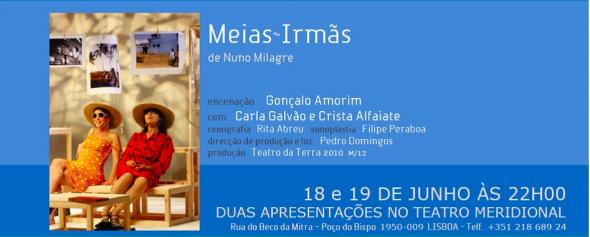
Meias~Irmãs, do nosso querido colaborador Nuno Milagre

hoje e amanhã no Teatro Meridional 

pode ler aqui um excerto e uma análise da peça 

18.06.2011 | par martalanca | meias~irmãs, teatro

Seminário de Estudos Africanos com Kerstin Pinther

21 de Junho, 3ª feira, às 18:00, na sala C401 no Edifício II do ISCTE-IUL,

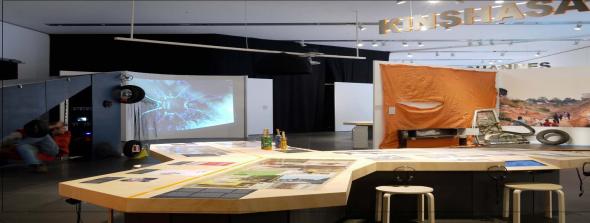
Seminário de Estudos Africanos, intitulado In Afropolis. On the making of an exhibition on art and urban practices, apresentado pelo Professor Doutor Kerstin Pinther.

Kerstin Pinther is Assistant Professor for the Arts of Africa at the Institute of Art History at Free University Berlin. Her research focus lies on modern and contemporary art and visual culture in West Africa, Egypt and the Diaspora as well as on architecture and urbanism in Africa. Among others she is currently involved in a collaborative research project on new art spaces in African Cities. She has taught at the universities of Bayreuth, Munich, Frankfurt and Berlin.

18.06.2011 | par martalanca | Estudos Africanos, Kerstin Pinther

Exibição do filme sobre Cabo Verde EDEN, de Daniel Blaufuks

22 de Junho, 21.30h, CC Malaposta, Olival Basto

18.06.2011 | par martalanca | Daniel Blaufuks

Odisseia - intercâmbio

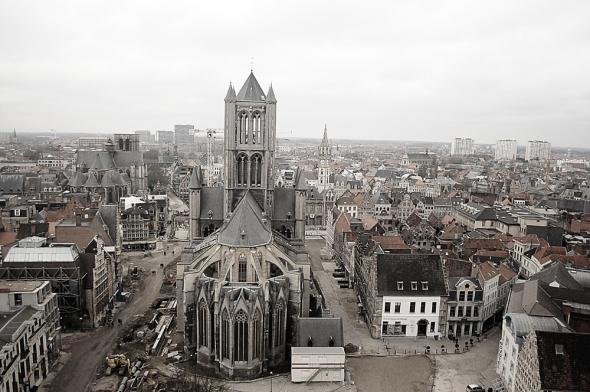
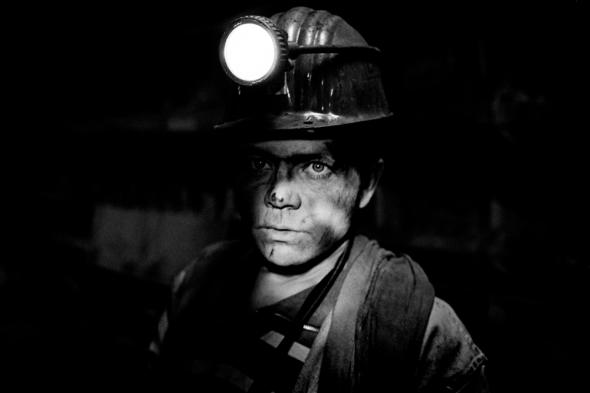
Odisseia ou, por outras palavras, “viagem sem destino”, é um projecto de intercâmbio fotográfico entre dois jovens fotógrafos, de duas nacionalidades diferentes pertencentes a dois continentes distintos, unidos pela sua História e pelos interesses em comum. Mário Macilau, fotógrafo de Moçambique, e Daniel Pilar, fotógrafo da Alemanha, unidos pela arte fotográfica e pelos interesses culturais nos quais os seus olhares se cruzam na necessidade de responder ao imaginário diário da Alemanha e de Moçambique, acreditando que a fotografia tem um ponto forte para educar e mostrar a realidade. Mais que simples imaginação, este projecto objectiva também o uso da fotografia como meio de expressão e comunicação mostrando uma outra face real através das imagens produzidas pelos autores através de exposição e publicações de catálogo.  

Mário MacilauMário MacilauDaniel PilarDaniel Pilar

17.06.2011 | par martalanca | fotografia, Mário Macilau