Photoquai - 3ème biennale des images du monde

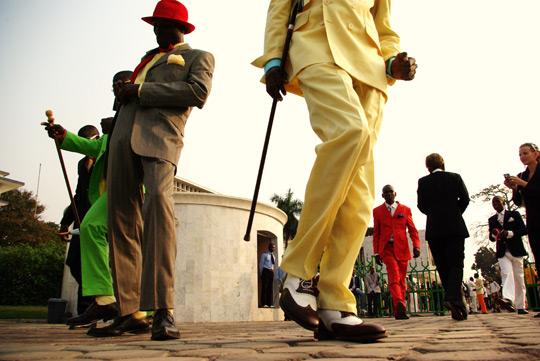
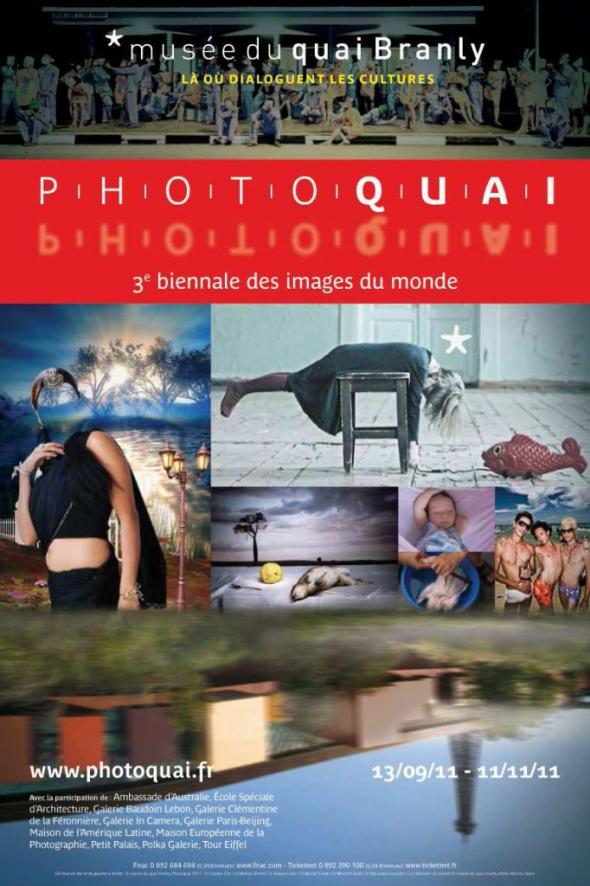
Depuis sa création en 2007 à l’initiative du musée du quai Branly, la biennale de photographie PHOTOQUAI met en valeur la photographie non occidentale et présente au grand public international des artistes dont l’œuvre est inédite en Europe.
Les deux premières éditions, en 2007 et 2009, ont fait découvrir 116 photographes venus chaque année de plus de trente pays différents.
Du 13 septembre au 11 novembre 2011, la troisième édition de PHOTOQUAI, dont la direction artistique est confiée à la photographe et cinéaste Françoise Huguier, présente 46 photographes venus de 29 pays.
L’exposition présentée sur les quais de la Seine se prolonge dans le jardin du musée du quai Branly ainsi que sur la tour Eiffel, ainsi que dans une dizaine d’institutions partenaires à Paris.

22.09.2011 | by joanapires | exposition, photographie

INTERNATIONAL WORKSHOP - New Spaces for Negotiating Art (and) History in African Cities

CFP: INTERNATIONAL WORKSHOP
New Spaces for Negotiating Art (and) History in African Cities
March 14-17, 2012 Point Sud, Centre for Research on Local Knowledge, Bamako, Mali Deadline: October 31, 2011

Prof. Dr. Kerstin Pinther, Art Historical Department, Arts of Africa, Free University Berlin Dr. Larissa Förster, Center for Advanced Studies “Morphomata. Genesis, Dynamics and Mediality of Cultural Figurations”, University of Cologne

In most African countries, cultural institutions like museums and art galleries, archives and art academies were established either by the colonial state or in the context of postcolonial nation building. Hence, the cultural field has often been shaped according to national aesthetics and/or thematic concepts and guidelines. Although many artists and activists have repeatedly criticized and distanced themselves from state-initiated cultural politics – as, for example, community archives and community art centres in Apartheid South Africa or initiatives like the “Laboratoire Agit-Art” in post-independence Senegal – from early on, it seems that particularly during the last two decades a series of new spaces and initiatives were created. They set themselves apart from municipal and/or state-affiliated institutions as well as from commercial (art) markets and created alternative models and platforms for negotiating art (and) history, reflecting upon and archiving art, visual culture and (cultural) history. Cases in point are the Contemporary Image Collective (Cairo), Doula’art (Douala), the District Six Museums (Cape Town) or Zoma Contemporary Art Centre (Addis Ababa), to name but a few.
Some of these initiatives aim to establish self-organized, non-hegemonic and experimental fields and orders of knowledge, others deliberately question institutions established by the postcolonial nation state, still others attempt at filling in where public institutions are undermined. In many cases, scholars, cultural practitioners, curators and artists as well as activists join to collaborate in these spaces. New forms of south-south- cooperation and transnational networking – including diasporic communities – are developed. This inter- and transdisciplinary workshop intends to take these independent spaces and initiatives as a starting point to discuss and analyze the expanding and diversifying field of cultural production and reflection in African cities.
We invite scholars and practitioners (founders, members and users of such spaces as well as artists and curators) to present case studies or comparative analyses with one or more of the following (research) focuses:
1) Histories
Against which historical backgrounds must the emergence of such spaces be read in different countries? How did they develop in different fields (art, culture, history), and in which ways are their histories connected?
2) Modi operandi: approaches, (curatorial) practices and strategies
How are these spaces organized and maintained? What curatorial practices, scientific and/or aesthetic strategies do they employ? Which media do they work with?3) Addressing and archiving the past
How do they reflect upon history? How and to what end do they acquire and work with (historical) collections and build (historical) archives?
4) Questioning canons
In what ways do such spaces comment on or even question canons of historical and art historical knowledge, e.g. established historical narratives or boundaries between art and (popular) culture etc.? Which theoretical and/or methodological debates do they draw upon or feed their work into?
5) Urban spaces and urban publics
How do these sites relate to the specific urban spaces and situations in which they have emerged? How do they engage with the broader urban public, with different audiences and groups of interested users and/or contributors? How do they affect the access and use of public space in African cities?
6) Revisiting state and municipal institutions
How do these initiatives position themselves vis-à-vis, relate to or collaborate with municipal or national institutions?
At the end of the workshop, possibilities and perspectives for a long-term cooperation between the workshop participants in the field of African Studies, Visual Culture Studies, Art History, Museum and Archive Studies will be explored. A publication of the workshop proceedings is envisaged.
We particularly encourage younger scholars and practitioners to submit a short CV and an abstract of no more than 500 words by October 31, 2011 to kerstin.pinther@fu-berlin.de and larissa.foerster@uni-koeln.de. Papers can be given in English or French. Contributors to the workshop will be asked to additionally chair one of the resulting 6 panels. Keynotes will be given by five invited speakers (t.b.a.) and will partly focus on alternative spaces in other regions than Africa. The project, which runs under the name “Programme Point Sud” of the German Research Foundation, will cover travel expenses and accommodation for all speakers.

22.09.2011 | by joanapires | african cities, Art, workshop

Journal of African Media Studies - Volume 3 Issue 2

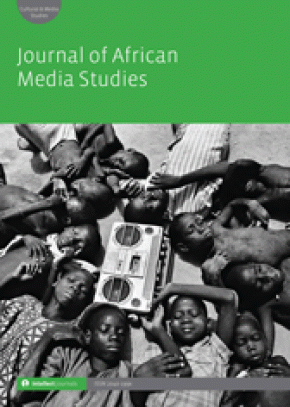
The Journal of African Media Studies is now available.
The Journal of African Media Studies (JAMS) is an interdisciplinary journal that provides a forum for debate on the historical and contemporary aspects of media and communication in Africa.

Abstracting & Indexing

Arts & Humanities Citation Index, Social Sciences Citation Index, Journal Citation Reports - Social Science Edition, Current Contents Connect - Arts & Humanities edition, Current Contents Connect - Social & Behavioral Sciences edition, International Bibliography of the Social Sciences (IBSS), Scopus, TOC Premier, Communication Abstracts Online, British Humanities Index.

Contents

Editorial
Authors: Winston Mano 
Contemporary African mediascapes: New actors, genres and communication spaces
Authors: Tilo Grätz  
‘Paroles de vie’: Christian radio producers in the Republic of Benin
Authors: Tilo Grätz 
Business of the Spirit: Ghanaian broadcast media and the commercial exploitation of Pentecostalism
Authors: Marleen de Witte 
Peace-making, power configurations and media practices in northern Uganda:A case study of Mega FM
Authors: Florence Brisset-Foucault 
Ghanaian entertainment brokers: Urban change, and Afro-cosmopolitanism, with neo-liberal reform
Authors: Oliver Thalén 
FESPACO in a time of Nollywood: The politics of the ‘video’ film at Africa’s oldest festival
Authors: Carmen McCain 
Revisiting the ‘Leapfrog’ debate in light of current trends of mobile phone Internet usage in the Greater Johannesburg area, South Africa
Authors: Nathalie Hyde-Clarke And  Tamsin van Tonder 
Young people, computers and the Internet in Niger
Authors: Gado Alzouma 

Book Review

Authors: Bruce Mutsvairo 

Film Review

Authors: Ikechukwu Obiaya

21.09.2011 | by joanapires | journal of african media studies

Spacecraft Icarus 13: Narratives of Progress from Elsewhere

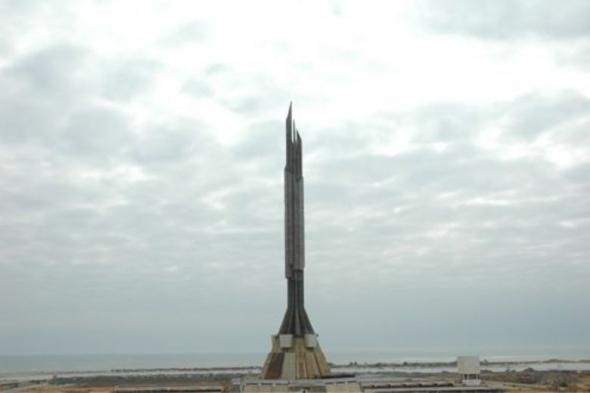
Kiluanji Kia Henda, The Spaceship Icarus 13, Luanda, 2007, photo, part of the series Icarus 13Kiluanji Kia Henda, The Spaceship Icarus 13, Luanda, 2007, photo, part of the series Icarus 13

The exhibition Spacecraft Icarus 13, as its title suggests, symbolically collapses together the narrative of the mythical flight of Icarus with that of a concrete historical saga, namely the United States’ space-conquering mission Apollo 13. In so doing it creates a ground from which to seek out the contemporary Narratives of Progress from Elsewhere indicated in its subtitle. The Apollo space program, which played out the US’s competition with the USSR in the ideological fight for Cold War supremacy under the flag of “progress,” saw its 1970 mission fall short when grave technical failures made a lunar landing impossible. Similarly, if an imaginary “Icarus 13” set out on a mission to the sun—as one of the works in the show proposes—it would necessarily fail: just as in the case of its Greek predecessor, getting too close to the sun would cause the craft to fall to its death.
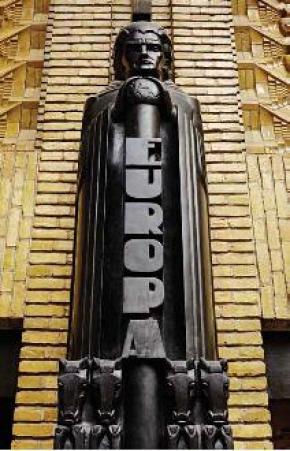
 Johannes Schwartz Johannes Schwartz

Yet the absurdity of such a mission is not what’s at stake here, and neither is a desire to revitalize the discussion about the divisions of the world driven by the doctrine of progress. Despite the complex philosophical, political, and historical controversies the notion of progress invites into the discussion, there is a powerful motivational aspect inherent in it. As a forward-looking ideal of improvement, it invites us to think the future beyond today’s devotion to the principle of unfettered global economic growth. This is what curator Cosmin Costinaş had in mind when he brought together artists from various parts of the world—but mainly from “elsewhere”— in order to identify a network of knowledge and dialogue from beyond the territories once (directly) involved in the Cold War rivalry. The works speak powerfully about the necessity to think beyond, in Costinaş’s words, “today’s neoliberal brand of progress,” which repackages “decay and confusion” into its incessant hegemonic practice. And although it might seem improbable to imagine an end to this neoliberal mission—perhaps as implausible as landing on the sun—where if not in the space of art can we shift the limits of what is imaginable, and with it the boundaries of possibility? (Maria Hlavajova)

Artists: Neil Beloufa, Patty Chang & David Kelley, Kiluanji Kia Henda, Federico Herrero, Alejandro Jodorowsky, Mikhail Kalatozov, Cristina Lucas, Yasuzo Masumura, Omar Meneses, Mauro Restiffe, Glauber Rocha, Apichatpong Weerasethakul, Lin Yilin

Curated by: Cosmin Costinaş

The exhibition is on view from 8 October until 23 December 2011 at BAK, basis voor actuele Kunst, Utrecht.
Spacecraft Icarus 13 is a research exhibition within the framework of the project FORMER WEST.
21.09.2011 | by joanapires | alternative visions, exhibition, exposição de fotografia, progress

Curso de Teatro em Luanda

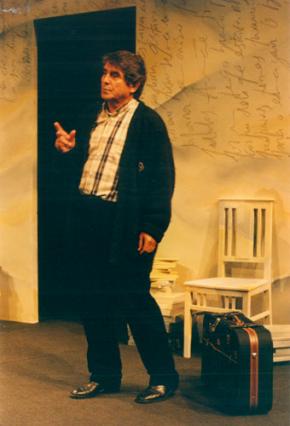
A Associação Cultural e Recreativa CHÁ DE CAXINDE e a Companhia Comuna-Teatro de Pesquisa, de Lisboa, estabeleceram uma parceria para a dinamização e aprofundamento da Arte Teatral em Angola.

Professor João MotaProfessor João Mota

Nestes termos, decorre desde 11 de Julho, no Nacional Cine Teatro, com o patrocínio da ENSA e da TAP-AIR PORTUGAL, uma OFICINA DE TEATRO dirigida pelo Professor João Mota, destinada à formação de actores dos diversos grupos de Luanda e não só, compreendendo trabalhos com as disciplinas, entre outras, de:

- Voz (articulação, dicção, projecção, ritmo)

- Teatro com texto

- Teatro sem texto

- Leitura de textos dramáticos e sua análise

- Construção do personagem

- Improvisação

- Silêncio

- Aprofundamento humano

No dia 29 de Setembro, às 20 horas, será realizado no Nacional Cine Teatro um exercício de final de Curso, demonstrativo do trabalho realizado.

21.09.2011 | by joanapires | Luanda, teatro

"Valores, Qualidade Institucional e Desenvolvimento"

Caro/as Amigo/as,

No quadro do projecto “Valores, Qualidade Institucional e

Desenvolvimento”, financiado pela Fundação Francisco Manuel dos Santos,

pretendemos obter a colaboração de seis doutores com formação em

Ciências Sociais.

O/As colaboradore/as farão, durante um ano, o estudo intensivo de uma

instituição e participarão da publicação dos resultados finais.

Agradeço que façam circular esta informação junto dos vossos contactos

que possam estar interessados em participar.


Um abraço,

Pela equipa do projecto

Margarida Marques


21.09.2011 | by joanapires | ciencias sociais, estudo

ARS 11 - Changes your perception of Africa and contemporary art

The ARS 11 exhibition investigates Africa in contemporary art. In addition to artists living in Africa, the show also features others who live outside the continent, artists of African descent as well as Western artists who address African issues in their work. The exhibition features some 300 works by a total of 30 artists. The Kiasma Theatre also has a programme of ARS events and performances.
The themes of the exhibition, such as migration, environmental problems and urban life are global, issues that affect us all. At best ARS 11 can produce new understanding and also provide background information on the situation in today’s Africa. The exhibition will extend the idea of what Africa, contemporary art and African contemporary art are today.

ARS 11 in a nutshell

ARS 11 is a major international art event filling Kiasma with artworks, performances, screenings, discussions and workshops. The ARS 11 curator team are Pirkko Siitari, Director of Kiasma, Arja Miller, Chief Curator, and Jari-Pekka Vanhala, Curator. The ARS 11 programme for Kiasma Theatre will be compiled by Riitta Aarniokoski.
The Centre for Contemporary Art Lagos (CCA, Lagos) will participate in the ARS 11 project with an exhibition of photographic work by J.D. ’Okhai Ojeikere from a career spanning more than 60 years. Guest curators for the Moments of Beauty exhibition are Bisi Silva and Aura Seikkula.
ARS 11 will be part of the programme of the Turku 2011 European Capital of Culture. The contribution of Kiasma will include two video installations from its collections: Where is Where? (2008) by Eija-Liisa Ahtila and WESTERN UNION: Small Boats (2007) by Isaac Julien.
The ARS 11 exhibition will extend to eight cities in Finland as well as to Stockholm, Sweden. The satellite exhibitions will be curated and produced by the partner museums and will showcase the themes of ARS 11.
The ARS 11 exhibition celebrates the 50-year history of the most important exhibition institution in Finland. Organised since 1961, the ARS exhibitions have played a crucial role in shaping ideas about art and giving a face to contemporary art in Finland. The history of the ARS exhibitions will be showcased during ARS 11 by two publications produced by the Central Art Archives of the Finnish National Gallery as well as by documentary material. The documentary is available for watching in Kiasma for the duration of the ARS 11 exhibition.

21.09.2011 | by joanapires | Africa, arte contemporânea, artistas africanos

Nôs Terra, no Centro InterculturaCidade, 23 Set., LISBOA

Exibição do documentário “NÔS TERRA”, de Anna Tica, Nuno Pedro e Toni Polo, no Centro InterculturaCidade, na Travessa do Convento de Jesus, 16-A em Lisboa (ao fundo da Calçada do Combro) às 19 horas do próximo dia 23 de Setembro (Sexta-Feira), com a presença da realizadora.

Após a projecção do filme, haverá um jantar tradicional caboverdiano, sujeito a marcação prévia por telefone 21 397 57 16 ou email centro@interculturacidade.gmail.com

Sobre o Filme: “Nôs Terra” é um documentário centrado no processo de construção de um contra discurso protagonizado por jovens negros portugueses.

Os pais vieram de uma antiga colónia portuguesa. Nasceram em Lisboa mas sentem-se mais cabo-verdianos. Saíram do bairro de infância para ir viver para o bairro social. Falam português mas também, desde muito cedo, aprenderam crioulo. Falam sobre a dualidade e a conflitualidade de pertencer a dois mundos que vivem de costas voltadas, mas que apesar de tudo, lhes pertencem como um só…

20.09.2011 | by franciscabagulho | Cabo-verde, Centro InterculturaCidade, cinema